Share your opinion and earn yourself a free Motley Fool premium report!

We are looking for Fools to join a 75 minute online independent market research forum on 15th / 16th December.

To find out more and express your interest please click here

3 key factors in determining the passive income potential of buying shares

These three factors can be significant when determining how much passive income an investor may earn from dividend shares. Our writer explains why.

| More on:

The content of this article was relevant at the time of publishing. Circumstances change continuously and caution should therefore be exercised when relying upon any content contained within this article.

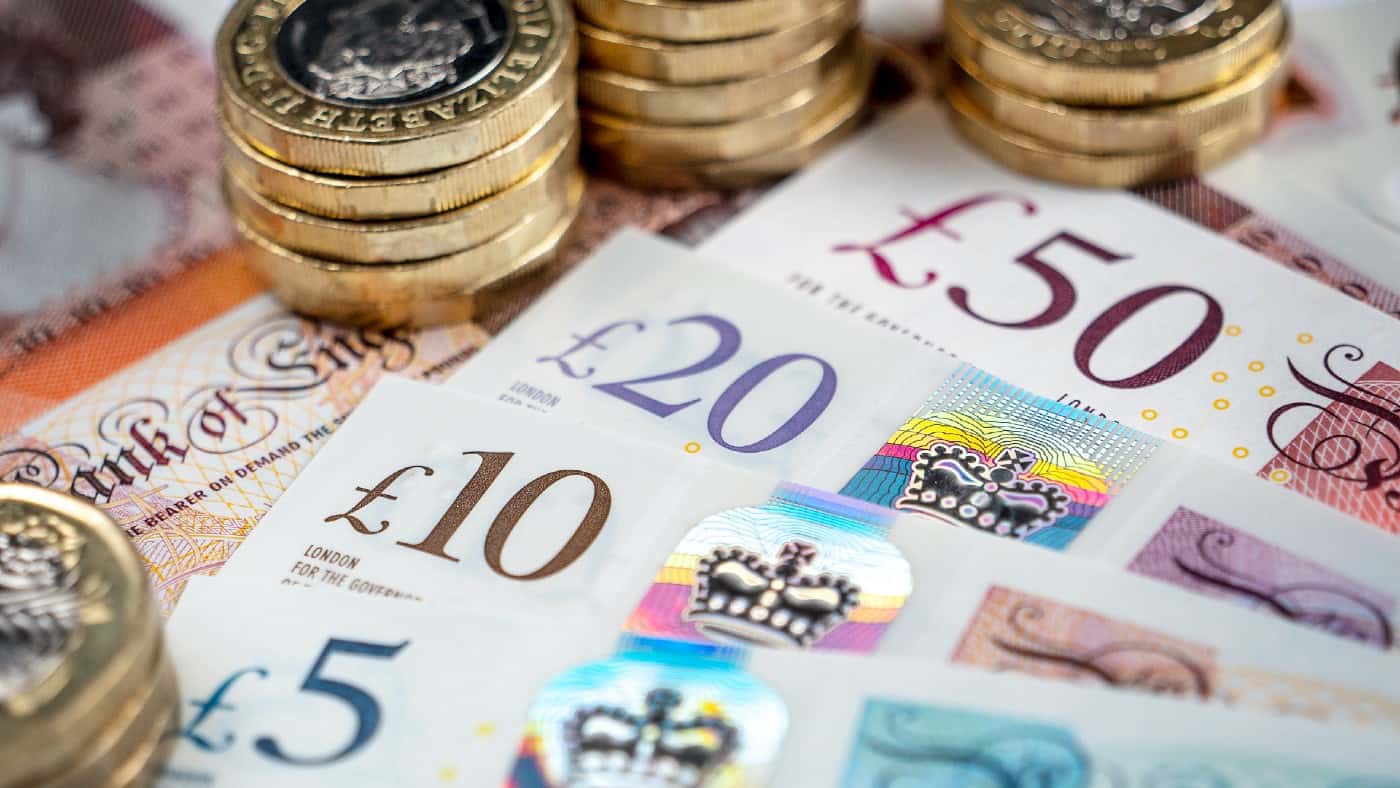
Close-up of British bank notes

Image source: Getty Images

You’re reading a free article with opinions that may differ from The Motley Fool’s Premium Investing Services. Become a Motley Fool member today to get instant access to our top analyst recommendations, in-depth research, investing resources, and more. Learn More.

The concept of putting money into proven businesses that pay dividends to shareholders is not as new as some other passive income ideas. But over centuries, it has proven to be potentially very lucrative.

As an approach, a few factors help determine how successful it is likely to be. Here are three of them.

1. Investing more can earn more

We normally talk about dividends in two ways: as an amount per share and in terms of yield. Yield is the annual dividends received, expressed as a percentage of what the investor pays for the shares.

I will dig into that in a moment. But before getting into details, one thing stands out: all other things being equal, there is a direct relationship between how much we invest in shares and how much passive income we earn.

So, versus £1,000 invested, £10,000 invested in exactly the same way should earn 10 times as much. An investment of £100,000 ought to earn 100 times as much, and so on.

Each investor has their own financial circumstances and those can change over time, but the broad principle applies: how much you hope to get out partly depends on how much you put in.

2. Yield matters – but so does the quality of the yield

Another important factor is the one I mentioned: dividend yield.

For example, at a 3.3% yield (the current FTSE 100 average), a £20,000 ISA would hopefully generate £660 per year in passive income. At a 5% yield, that would rise to £1,000, while an 8% yield could mean £1,600 in passive income annually.

It can be tempting to think, based on that, that an easy way to earn juicy passive income streams is to focus on high-yield shares.

But dividends are never guaranteed. Sometimes a high yield can last, but sometimes the dividend is cut and the yield falls perhaps even to zero. Actually, that can happen to a yield of any size, but a high one can be a red flag that investors are expecting a dividend cut.

One share in my portfolio illustrates this dilemma, I think. B&M European Value Retail (LSE: BME) has a dividend yield of 6.8%.

That partly reflects its share price crash: it is down 38% so far this year and recently hit an all-time low.

On one hand, B&M has a proven business model, is profitable, and could benefit from a weak economy leading shoppers to tighten their belts and consider shopping at the discount retailer.

Yet, if things are so promising, why the share price fall? Selling for seven times earnings, B&M now looks like a possible bargain – or value trap.

One risk is weak consumer goods sales. If B&M cannot compete on such a core product area, it could suggest its broader offer may lose appeal with shoppers. That could lead to falling sales and profits.

However, I plan to hang onto this share for the long term.

3. Managing costs

A third factor in determining passive income involves how someone invests. Within the annual contribution allowance, a Stocks and Shares ISA could help. There are many options available and choosing the right one can influence how much gets eaten up in fees and commissions.

The same applies outside of an ISA, for example in a share-dealing account or app.

Please note that tax treatment depends on the individual circumstances of each client and may be subject to change in future. The content in this article is provided for information purposes only. It is not intended to be, neither does it constitute, any form of tax advice. Readers are responsible for carrying out their own due diligence and for obtaining professional advice before making any investment decisions.


C Ruane has positions in B&M European Value. The Motley Fool UK has recommended B&M European Value. Views expressed on the companies mentioned in this article are those of the writer and therefore may differ from the official recommendations we make in our subscription services such as Share Advisor, Hidden Winners and Pro. Here at The Motley Fool we believe that considering a diverse range of insights makes us better investors.

More on Investing Articles

Two business people sitting at cafe working on new project using laptop. Young businesswoman taking notes and businessman working on laptop computer.
Investing Articles

One of my top passive income stocks to consider for 2026 is…

This under-the-radar income stock has grown its dividend by over 370% in the last five years! And it might just…

Read more »

Two female adult friends walking through the city streets at Christmas. They are talking and smiling as they do some Christmas shopping.
Investing Articles

Here’s how you can invest £5,000 in UK stocks to start earning a second income in 2026

Zaven Boyrazian looks at some of the top-performing UK stocks in 2025, and shares which dividend-paying sector he thinks could…

Read more »

Smiling young man sitting in cafe and checking messages, with his laptop in front of him.
Investing Articles

This penny stock looks to me like Ideagen 10 years ago (before it sold for £1.1bn!)

Is history repeating itself with this up-and-coming penny stock? Mark Hartley investigates the potential of a company that mirrors a…

Read more »

The words "what's your plan for retirement" written on chalkboard on pavement somewhere in London
Investing Articles

How I generated a 25.9% return in my SIPP in 2025 (and my strategy for 2026!)

Zaven Boyrazian managed to achieve market-beating double-digit returns in his SIPP so far in 2025. Here, he explains how and…

Read more »

Middle-aged Caucasian woman deep in thought while looking out of the window
Investing Articles

How much do you need in an ISA to double the 2026 State Pension?

Many ISA investors aim to earn a tax-free second income, but how much do they need to invest to double…

Read more »

Investor looking at stock graph on a tablet with their finger hovering over the Buy button
Investing Articles

With P/E’s below 9, are these 3 cheap penny stocks no brainers?

Searching for the best penny stocks to buy heading into 2026? Royston Wild reckons these small-cap UK shares may be…

Read more »

ISA Individual Savings Account
Investing Articles

How big does a Stocks and Shares ISA need to be to target a monthly income of £1k?

Mark Hartley calculates how much investment is needed to target a £12k tax-free annual income in 2026, and the stocks…

Read more »

Middle aged businesswoman using laptop while working from home
Investing Articles

3 no-brainer UK shares to buy now for 2026, according to experts

City analysts rate these FTSE 100 and FTSE 250 as great Buys for the New Year. Royston Wild isn't convinced…

Read more »