
As Cash ISA changes approach, here’s an alternative low-risk way to build wealth

If reports are right, alterations to the Cash ISA could be imminent. But any changes could also create opportunity, as Royston Wild explains.

| More on:

The content of this article was relevant at the time of publishing. Circumstances change continuously and caution should therefore be exercised when relying upon any content contained within this article.

You’re reading a free article with opinions that may differ from The Motley Fool’s Premium Investing Services. Become a Motley Fool member today to get instant access to our top analyst recommendations, in-depth research, investing resources, and more. Learn More.

A young woman sitting on a couch looking at a book in a quiet library space.

Image source: Getty Images

Cash ISAs had slipped out of the headlines recently. But they’ve bounced back into the spotlight this week, amid news that changes to annual allowances are just around the corner.

On Monday (30 June), speculation that the £20,000 yearly limit will be sliced back gained momentum. On that day, government officials said a shake-up could come later in July.

Chancellor of the Exchequer Rachel Reeves will announce changes at her upcoming Mansion House speech on 15 July, these sources told the Financial Times.

A rebasing in the allowance to around £5,000 a year is widely tipped, though sources said a final figure hasn’t yet been settled upon.

Good idea?

Personally, I don’t like the ‘stick’ approach the Chancellor is taking to reduce Brits’ reliance on savings accounts. I think the ‘carrot’ is a better way to encourage people to invest, through better incentives (like the elimination of Stamp Duty on most UK shares) and wider financial education.

However, the rationale to make people think more about investing is sound. Like Reeves, I believe savings accounts like the Cash ISA serve an important role in portfolio diversification, and as a way to hold temporary cash.

But prioritising cash savings as part of a retirement plan can be disastrous. Over the last decade, the average Cash ISA investor has reported an average annual return of 1.21%, according to Moneyfacts.

That’s far below the 9.64% that Stocks and Shares ISA users have typically enjoyed.

Based on those figures, someone investing £300 a month in a Cash ISA would have £130,127 after 30 years (excluding trading fees). If they’d put that in an investing ISA instead, they could have turned that into £628,215.

Talking trusts

The main problem here seems to be misconceptions around the danger to individuals’ capital. People fearing ISA changes might not want to be frogmarched into taking on unacceptable levels of risk.

The good news is that we don’t have to, given the range of investments on offer with a Stocks and Shares ISA.

Individuals can diversify across hundreds of investments to spread risk across regions and sectors if they want to. They can also achieve exposure to different asset classes like gold, cash, and bonds as well as equities.

Investment trusts like the Capital Gearing Trust (LSE:CGT) are set up for this purpose. With a mission statement “to preserve and over time grow shareholders’ real wealth“, it invests in equities, bonds, commodities, and cash. And it doesn’t entertain risky strategies like using gearing (borrowed funds) or short selling to achieve it.
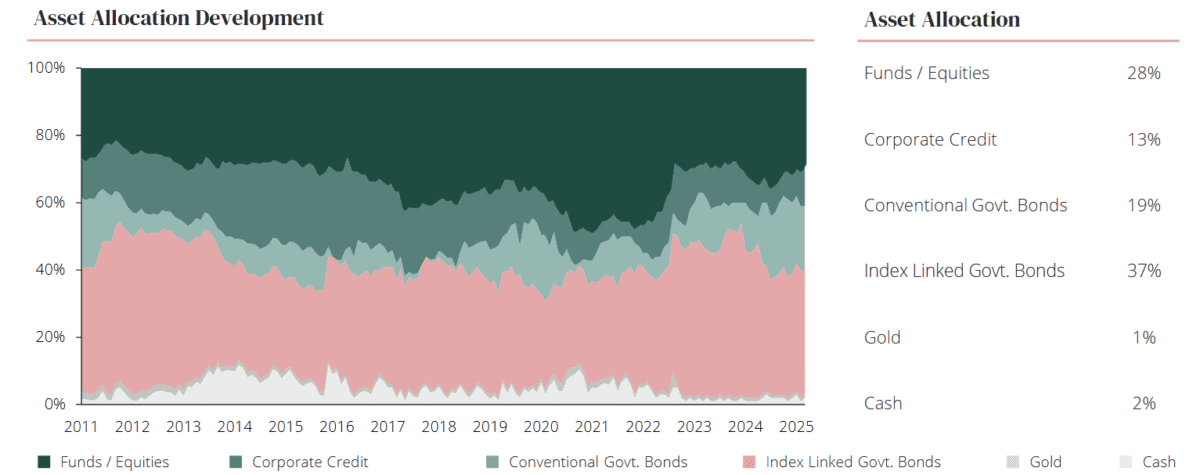
Portfolio holdings of Capital Gearing Trust
Source: Capital Gearing Trust

Today, the trust has 190 different holdings. These include higher-risk shares and equity-based funds. But as you can see, less than 30% of its capital is tied up in such assets. The lion’s share is in corporate and government bonds, with some gold and cash added in for extra diversification.

Since 2015, Capital Gearing Trust has delivered an average annual return of 4.6%. That’s below the average returns that Stocks and Shares ISA investors have enjoyed. But it still sails above the 1.21% that a Cash ISA would have provided.

This is just one of many trusts and exchange-traded funds (ETFs) Brits can buy to target strong returns whilst still limiting risk. It’s why I don’t think cash savers need to fear upcoming changes to the ISA regime.


Royston Wild has no position in any of the shares mentioned. The Motley Fool UK has no position in any of the shares mentioned. Views expressed on the companies mentioned in this article are those of the writer and therefore may differ from the official recommendations we make in our subscription services such as Share Advisor, Hidden Winners and Pro. Here at The Motley Fool we believe that considering a diverse range of insights makes us better investors.

More on Investing Articles

Happy African American Man Hugging New Car In Auto Dealership
Investing Articles

Below 40p, Aston Martin’s shares are sinking fast. How low could they go?

Aston Martin’s share price has crashed 98% since IPO. Could it hit zero, or will something come along and change…

Read more »

This way, That way, The other way - pointing in different directions
Investing Articles

This FTSE 100 stock has an above-average yield and sells on a P/E ratio of 6. Why?

Is this FTSE 100 stock the apparent bargain it seems? Or could events beyond its control hurt profits and potentially…

Read more »

A pastel colored growing graph with rising rocket.
Investing Articles

Here’s why 8.8%-yielding Legal & General shares remain my top pick for a high-income retirement portfolio

Legal & General shares have delivered years of rising income for my family — and new forecasts suggest the payouts…

Read more »

Person holding magnifying glass over important document, reading the small print
Investing Articles

Around £45, is it time for me to buy this overlooked FTSE growth gem on the dip after strong results?

This FTSE 100 growth share looks far cheaper than its fundamentals merit — and if the market wakes up to…

Read more »

Rolls-Royce's Pearl 10X engine series
Investing Articles

These 5 red flags mean I’m avoiding Rolls-Royce shares like the plague!

Thinking about buying Rolls-Royce shares on the dip? Royston Wild thinks risk-averse investors should consider avoiding the FTSE 100 stock.

Read more »

Smiling white woman holding iPhone with Airpods in ear
Investing Articles

After the FTSE 250’s slump, I see beautiful bargains everywhere!

Fancy doing a bit of bargain shopping? Royston Wild explains why now could a great time to buy FTSE 250…

Read more »

Close-up of a woman holding modern polymer ten, twenty and fifty pound notes.
US Stock

As the S&P 500 tumbles, this stock continues to soar

Jon Smith takes a deep-dive into a farming stock that's jumped 23% so far this year, easily beating the S&P…

Read more »

Mature black woman at home texting on her cell phone while sitting on the couch
Growth Shares

£10k invested in the FTSE 100 via an ISA on 7 April is currently worth…

Jon Smith runs the numbers on a portfolio of FTSE 100 companies over the past year and points out one…

Read more »