Does the BP or Shell share price offer the better value?

Over the past five years, the Shell share price has outperformed BP’s. But amid rumours of a merger, which of the two energy giants is the cheapest?

| More on:

The content of this article was relevant at the time of publishing. Circumstances change continuously and caution should therefore be exercised when relying upon any content contained within this article.

You’re reading a free article with opinions that may differ from The Motley Fool’s Premium Investing Services. Become a Motley Fool member today to get instant access to our top analyst recommendations, in-depth research, investing resources, and more. Learn More.

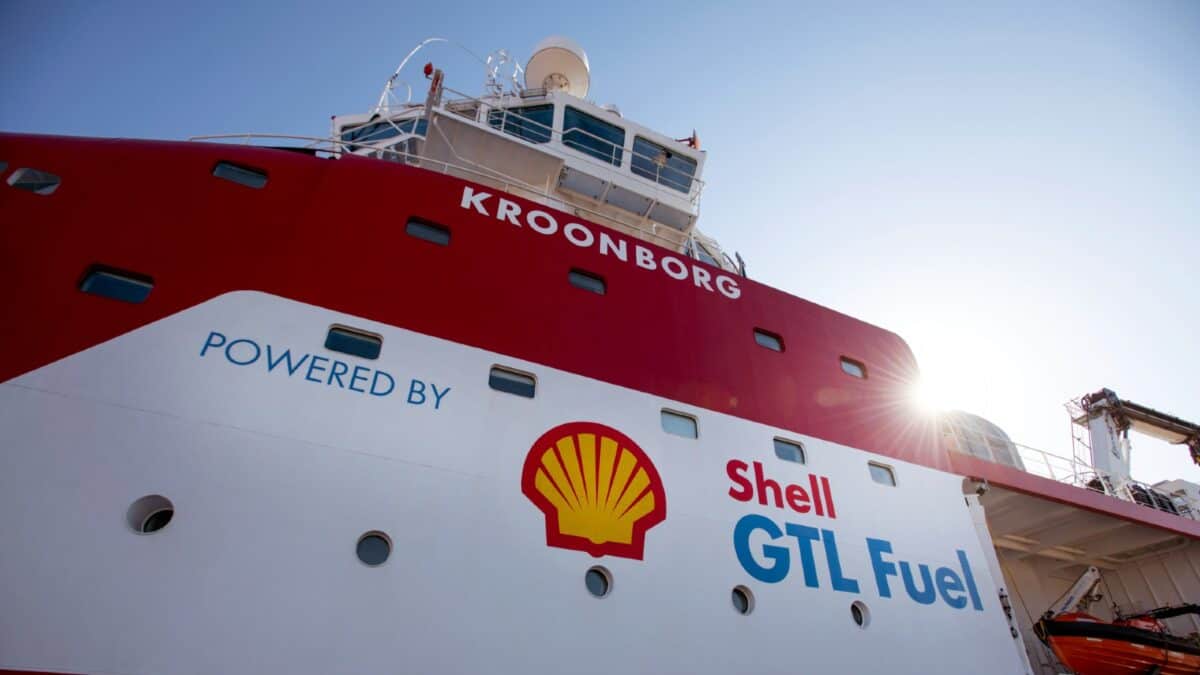
Side of boat fuelled by gas to liquids, advertising Shell GTL Fuel

Image source: Olaf Kraak via Shell plc

Since June 2020, the Shell (LSE:SHEL) share price has risen 96%. In contrast, BP’s (LSE:BP.) has increased by 21%. This mismatch in performance probably explains why rumours persist that the latter could be a takeover target. Indeed, a merger with Shell remains a possibility.

A potential buyer might see this drop in value as an opportunity to acquire a bit of a bargain. With this in mind, let’s take a look at the valuations of the two companies.

1. Balance sheet

The price-to-book (P/B) ratio measures a stock’s market cap relative to its accounting value. A P/B of one indicates that if all a company’s assets were sold for the amounts stated in its accounts — and the proceeds used to clear its liabilities — the cash left over would be the same as its stock market valuation.

Based on its latest published balance sheets (31 March), BP appears to offer the better value. Its share price would have to rise by 12% for its P/B ratio to be the same as that of its larger rival.

MeasureShellBP
Market cap ($bn)209.280.6
Equity ($bn)180.778.0
Price-to-book ratio1.161.03
Source: London Stock Exchange and company reports / £ amounts converted at 27 June

2. Profit

Another popular valuation technique is the price-to-earnings (P/E) ratio. But to be meaningful, it requires companies to be profitable.

Surprisingly, during the four quarters to 31 March, BP reported a loss of $7.61 a share. However, energy accounting can be complex. That’s why BP prefers to use replacement cost profit (RCP), which removes the impact of price movements on unsold inventories. Using this, BP’s valued at approximately 9.4 times earnings.

Shell doesn’t report RCP. Instead, using more conventional measures, it made a profit of $3.44 a share. This means its P/E ratio is around 10.3.

On paper at least, this is another win for BP. However, we need to be careful as we are not making a like-for-like comparison here.

3. Cash

Over the past four quarters, Shell reported free cash flow of $50.6bn. BP generated $25.1bn.

In simple terms, the former’s twice as cash generative, yet its stock market valuation is 2.5 times higher.

That’s another victory for BP shares.

Final thoughts

Of course, accurately valuing companies is more complicated than this. For example, some point to BP’s large debt pile – it’s equal to 88% of its market cap — as a concern. 

However, this type of analysis does give a rough idea as to the respective valuations of the two energy giants.

And on balance, it appears to me that BP offers the better value at the moment. On this basis, investors comfortable with the sector could consider taking a stake. However, they need to be mindful of the risks that come with oil and gas stocks. Namely, earnings can fluctuate significantly due to volatile energy prices, the industry is operationally one of the most difficult to get right, and — due to restrictions of ethical funds — there’s a reduced pool of investors willing to invest.

Ultimately, a stock’s only worth what someone’s prepared to pay for it. It will therefore be interesting to see if Shell’s directors agree that BP looks to be undervalued. Yesterday (26 June), they issued a statement saying they have “not been actively considering making an offer”.

This demonstrates that taking a position on the basis of rumour and speculation would be risky. Buying shares because they appear to be attractively valued is more sensible.


James Beard has positions in Bp P.l.c. The Motley Fool UK has no position in any of the shares mentioned. Views expressed on the companies mentioned in this article are those of the writer and therefore may differ from the official recommendations we make in our subscription services such as Share Advisor, Hidden Winners and Pro. Here at The Motley Fool we believe that considering a diverse range of insights makes us better investors.

More on Investing Articles

Investing Articles

£10,000 buys 373 shares in this FTSE 100 heavyweight that’s tipped to surve in 2026

With analysts expecting the stock to climb 54% in the next 12 months, is now the perfect time for investors…

Read more »

This way, That way, The other way - pointing in different directions
Investing Articles

Are BP shares a slam-dunk buy as oil prices rocket – or is there a hidden danger?

As the oil price rises, investors might expect BP shares to follow. But Harvey Jones warns it may not play…

Read more »

Investing Articles

2 growth stocks to consider buying for an ISA in March

Here are two growth stocks I think are worth considering buying. Both have stumbled recently, even though the underlying businesses…

Read more »

Close-up of a woman holding modern polymer ten, twenty and fifty pound notes.
Investing Articles

How long might a Stocks and Shares ISA take to earn a £950 monthly second income?

Christopher Ruane explains how someone could seek to turn a Stocks and Shares ISA into a source of monthly passive…

Read more »

British pound data
Investing Articles

Get yourself ready for a violent stock market crash!

The FTSE 100 is sinking, raising fears of a fresh stock market crash. What are you doing about it? Here's…

Read more »

ISA Individual Savings Account
Investing Articles

Hands up, who’s dreaming of a million in a Stocks and Shares ISA?

How to make a million in a Stocks and Shares ISA, that's what headlines keep banging on about. Let's look…

Read more »

British Pennies on a Pound Note
Investing Articles

OK, who’s dreaming of making a million from red-hot penny shares?

Investors in penny shares can sound like the most upbeat optimists there are. It can work, but hopes need to…

Read more »

Three generation family are playing football together in a field. There are two boys, their father and their grandfather.
Investing Articles

Could this ultra-high-yielding FTSE 100 passive income gem quietly fund my retirement?

With rising payouts, strong cash generation and impressive earnings forecasts, this FTSE 100 dividend gem may be developing into a…

Read more »