
Looking to de-risk a Stocks and Shares ISA? Consider this!

Investing in a Stocks and Shares ISA doesn’t mean having to accept loads of risk, as Royston Wild shows with these investment trusts.

| More on:

The content of this article was relevant at the time of publishing. Circumstances change continuously and caution should therefore be exercised when relying upon any content contained within this article.

Man smiling and working on laptop

Image source: Getty images

You’re reading a free article with opinions that may differ from The Motley Fool’s Premium Investing Services. Become a Motley Fool member today to get instant access to our top analyst recommendations, in-depth research, investing resources, and more. Learn More.

The enormous tax benefits that Stocks and Shares ISAs provide can make them formidable weapons to target long-term wealth. Investors can put the money safeguarded from HMRC to work, boosting the compounding effect to help them grow their pension pot faster.

These tax savings have helped Stocks and Shares ISAs deliver an annual return close to 10% over the last decade. Yet despite these benefits, many Britons remain reluctant to use them due to their higher risk profile. The recent panic over rumoured cuts to Cash ISA allowances to encourage share investing is evidence of this.

Please note that tax treatment depends on the individual circumstances of each client and may be subject to change in future. The content in this article is provided for information purposes only. It is not intended to be, neither does it constitute, any form of tax advice. Readers are responsible for carrying out their own due diligence and for obtaining professional advice before making any investment decisions.

But investing on the stock market doesn’t have to involve taking on uncomfortable levels of risk. And with the poor returns on offer from Cash ISAs — the average annual return since 2015 is just over 1% — I myself believe using a Stocks and Shares ISA too is a no brainer (it’s why I currently use both types of account to target large returns and manage risk).

Getting personal

Investors can spread the risk they face by purchasing exchange-traded funds (ETFs) or investment trusts.

Pooled investments like these can allocate capital across a wide range of assets, with investors choosing the one that best balances their desired return and tolerance of risk. The Personal Assets Trust (LSE:PNL) is one such vehicle I think is an attractive way for ISA investors to consider building wealth.

More than a third (36%) of the trust is locked up in shares, its single most represented asset class. Major holdings here include UK and US blue-chip shares Unilever, Microsoft, Visa, and Diageo. That also adds risk linked to the performance of individual shares (like Diageo, which has been weak recently).

However, the rest is allocated to classic, stable assets like government bonds, precious metals and cash. As a result, investors still enjoy relative low levels of volatility, as the chart below shows:
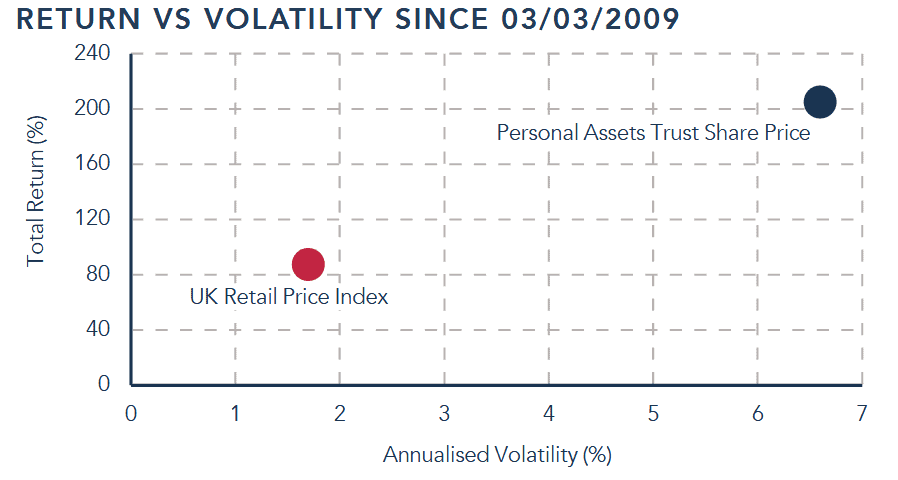
Source: Troy Asset Management

Substantial safe-haven holdings today include gold bars (10.6% of the trust), US inflation-protected government bonds (26%) and short-dated Gilts (10%).

Since 2015, the fund has delivered an average annual return of 5.3%. That’s far better than a basic cash savings account has provided in that time.

Holy moly

Investors chasing better returns can achieve this by considering trusts with greater allocations to equities. This involves more risk risk, though vehicles which invest across sectors and regions can still substantially reduce the danger to individuals’ cash.

Take the Monks Investment Trust (LSE:MNKS). The average annual return here is a brilliant 10.3%, achieved across scores of different companies (105 today) spanning the globe:
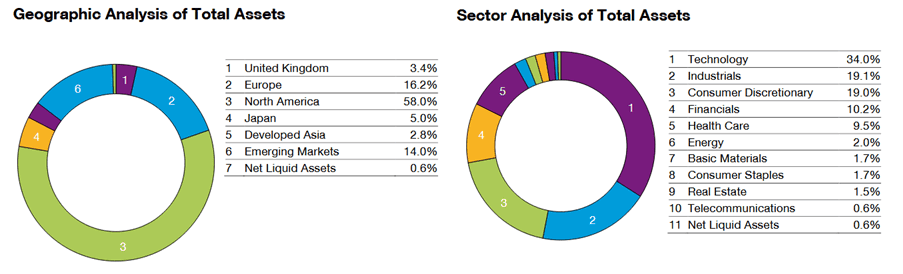
Source: Baillie Gifford

Major holdings here include the ‘Magnificent Seven’ Microsoft, Meta, Amazon and Nvidia. These companies can be volatile during economic slowdowns, but over the long term have provided strong returns as the digital economy has grown.

With management by financial services giant Baillie Gifford, investors

Both trusts expose investors to risks such as rising interest rates and market declines. Yet as their long-term performances show, they can still be a great way for cautious investors to generate long-term wealth and I think they’re worthy of further research.


John Mackey, former CEO of Whole Foods Market, an Amazon subsidiary, is a member of The Motley Fool’s board of directors. Randi Zuckerberg, a former director of market development and spokeswoman for Facebook and sister to Meta Platforms CEO Mark Zuckerberg, is a member of The Motley Fool's board of directors. Royston Wild has positions in Diageo Plc. The Motley Fool UK has recommended Amazon, Diageo Plc, Meta Platforms, Microsoft, Nvidia, Unilever, and Visa. Views expressed on the companies mentioned in this article are those of the writer and therefore may differ from the official recommendations we make in our subscription services such as Share Advisor, Hidden Winners and Pro. Here at The Motley Fool we believe that considering a diverse range of insights makes us better investors.

More on Investing Articles

A pastel colored growing graph with rising rocket.
Investing Articles

Will a Bank of England interest rate cut light a rocket under this forgotten UK income stock?

Harvey Jones says this FTSE 100 income stock could get a real boost once the next interest rate cut lands.…

Read more »

Fireworks display in the shape of willow at Newcastle, Co. Down , Northern Ireland at Halloween.
Dividend Shares

Look what happened to Greggs shares after I said they were a bargain!

After a truly terrible year, Greggs shares collapsed to their 2025 low on 25 November. That very day, I said…

Read more »

Thoughtful man using his phone while riding on a train and looking through the window
Dividend Shares

Will the Lloyds share price breach £1 in 2026?

After a terrific 2025, the Lloyds share price is trading at levels not seen since the global financial collapse in…

Read more »

UK financial background: share prices and stock graph overlaid on an image of the Union Jack
Investing Articles

New to investing in the stock market? Here’s how to try to beat the Martin Lewis method!

Martin Lewis is now talking about stock market investing. Index funds are great, but going beyond them can yield amazing…

Read more »

Passive income text with pin graph chart on business table
Investing Articles

This superb passive income star now has a dividend yield of 10.4%!

This standout passive income gem now generates an annual dividend return higher than the ‘magic’ 10% figure, and consensus forecasts…

Read more »

Young woman working at modern office. Technical price graph and indicator, red and green candlestick chart and stock trading computer screen background.
Investing Articles

£5,000 invested in Tesco shares on 1 January 2025 is now worth…

Tesco shares proved a spectacular investment this year, rising 18.3% since New Year's Day. And the FTSE 100 stock isn't…

Read more »

This way, That way, The other way - pointing in different directions
Investing Articles

With 55% earnings growth forecast, here’s where Vodafone’s share price ‘should’ be trading…

Consensus forecasts point to 55% annual earnings growth to 2028. With a strategic shift ongoing, how undervalued is Vodafone’s share…

Read more »

A pastel colored growing graph with rising rocket.
Investing Articles

Here’s how I’m targeting £12,959 a year in my retirement from £20,000 in this ultra-high yielding FTSE 100 income share…

Analysts forecast this high-yield FTSE 100 income share will deliver rising dividends and capital gains, making it a powerful long-term…

Read more »