
3 top tips to consider for building a second income in retirement!

Looking to boost your chances of a comfortable retirement? These investing strategies could help build a large second income.

| More on:

The content of this article was relevant at the time of publishing. Circumstances change continuously and caution should therefore be exercised when relying upon any content contained within this article.

Storytelling image of a multiethnic senior couple in love - Elderly married couple dating outdoors, love emotions and feelings

Image source: Getty Images

You’re reading a free article with opinions that may differ from The Motley Fool’s Premium Investing Services. Become a Motley Fool member today to get instant access to our top analyst recommendations, in-depth research, investing resources, and more. Learn More.

There are plenty of ways that investors can target a second income in retirement.

Some methods may be more successful than others. There’s also no blueprint for investors to follow, as the strategies someone adopts will depend on their individual circumstances, financial goals and risk tolerance.

That said, certain ‘golden rules’ exist when it comes to saving or investing. Regardless of personal situation, they can be powerful weapons in creating long-term wealth.

1. Bypass the taxman

The first thing to consider is using a Self-Invested Personal Pension (SIPP) or Individual Savings Account (ISA) to invest. Within the ISA category, a Stocks and Shares ISA and/or Lifetime ISA can be used to buy shares, trusts and funds listed in the UK and overseas.

With both an ISA and a SIPP, an investor doesn’t pay a single penny in tax on any capital gains and dividends. And given the large annual allowances on these products — £20k on a Stocks and Shares ISA, and a sum equivalent to one’s yearly earnings (up to £60k) — the savings can be considerable.

As dividends and share prices (hopefully) grow, the amount saved on taxes could grow considerably too. Over two-to-three decades we could be talking many tens — or even hundreds — of thousands of pounds.

Please note that tax treatment depends on the individual circumstances of each client and may be subject to change in future. The content in this article is provided for information purposes only. It is not intended to be, neither does it constitute, any form of tax advice. Readers are responsible for carrying out their own due diligence and for obtaining professional advice before making any investment decisions.

2. Diversify

With an ISA and/or SIPP set up, the next thing to consider is creating a diversified portfolio of shares and other assets. This reduces risk, provides exposure to different investing opportunities, and typically delivers a smoother return over the economic cycle.

A trust like the The City of London Investment Trust (LSE:CTY) could be an effective stock to consider targeting this. Dating back to 1932, this is one of the oldest London-listed trusts, and has around £2.4bn worth of assets.

It’s focused on delivering a blend of growth and passive income through exposure to 10 different sectors. Some of its largest holdings include HSBC, Shell, RELX, Unilever and British American Tobacco.
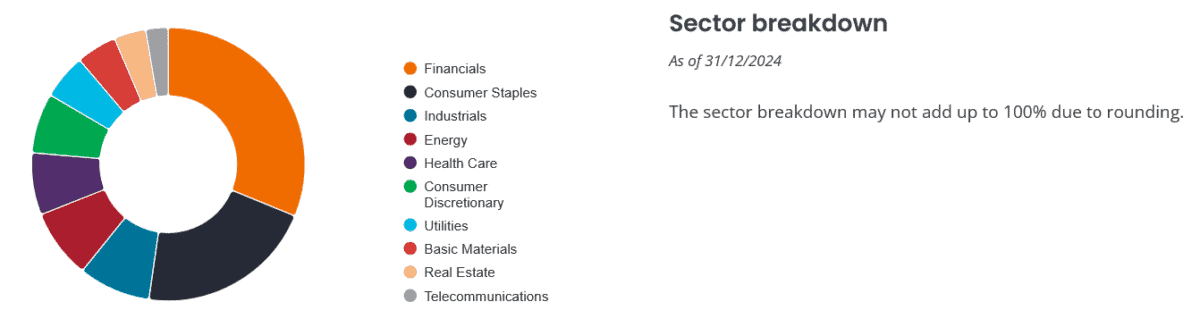
Source: City of London Investment Trust

Almost 90% of the fund is tied up in UK equities, which could leave it vulnerable if market appetite for British assets trends lower. But I’m confident it could continue to be an effective diversification tool over the long term.

Since 2005, the trust has delivered an average annual return of 6.4%. If this continues, a £500 monthly investment over 30 years creates a retirement fund of £553,089.

3. Buy dividend shares

Once they hit retirement, an investor has a number of options open to them to add a second income to their State Pension.

They can buy an annuity, or draw down a percentage from their portfolio. Alternatively, they might invest their money elsewhere (like in buy-to-let property for a regular rental income).

Another option is to target a passive income from high-yield dividend shares. This can deliver a steady stream of cash through regular dividend payments as well as provide scope for capital appreciation.

Additionally, this method offers the possibility of dividend growth over time, which can help mitigate the eroding impact of inflation on an individual’s passive income.


Royston Wild has no position in any of the shares mentioned. The Motley Fool UK has recommended British American Tobacco P.l.c., HSBC Holdings, RELX, and Unilever. Views expressed on the companies mentioned in this article are those of the writer and therefore may differ from the official recommendations we make in our subscription services such as Share Advisor, Hidden Winners and Pro. Here at The Motley Fool we believe that considering a diverse range of insights makes us better investors.

More on Investing Articles

UK financial background: share prices and stock graph overlaid on an image of the Union Jack
Investing Articles

New to investing in the stock market? Here’s how to try to beat the Martin Lewis method!

Martin Lewis is now talking about stock market investing. Index funds are great, but going beyond them can yield amazing…

Read more »

Passive income text with pin graph chart on business table
Investing Articles

This superb passive income star now has a dividend yield of 10.4%!

This standout passive income gem now generates an annual dividend return higher than the ‘magic’ 10% figure, and consensus forecasts…

Read more »

Young woman working at modern office. Technical price graph and indicator, red and green candlestick chart and stock trading computer screen background.
Investing Articles

£5,000 invested in Tesco shares on 1 January 2025 is now worth…

Tesco shares proved a spectacular investment this year, rising 18.3% since New Year's Day. And the FTSE 100 stock isn't…

Read more »

This way, That way, The other way - pointing in different directions
Investing Articles

With 55% earnings growth forecast, here’s where Vodafone’s share price ‘should’ be trading…

Consensus forecasts point to 55% annual earnings growth to 2028. With a strategic shift ongoing, how undervalued is Vodafone’s share…

Read more »

A pastel colored growing graph with rising rocket.
Investing Articles

Here’s how I’m targeting £12,959 a year in my retirement from £20,000 in this ultra-high yielding FTSE 100 income share…

Analysts forecast this high-yield FTSE 100 income share will deliver rising dividends and capital gains, making it a powerful long-term…

Read more »

A senior man using hiking poles, on a hike on a coastal path along the coastline of Cornwall. He is looking away from the camera at the view.
Investing Articles

Is Diageo quietly turning into a top dividend share like British American Tobacco?

Smoking may be dying out but British American Tobacco remains a top dividend share. Harvey Jones wonders if ailing spirits…

Read more »

Young woman holding up three fingers
Investing Articles

Just released: our 3 top income-focused stocks to consider buying in December [PREMIUM PICKS]

Our goal here is to highlight some of our past recommendations that we think are of particular interest today, due…

Read more »

Person holding magnifying glass over important document, reading the small print
Investing Articles

Tesco’s share price: is boring brilliant?

Tesco delivers steady profits, dividends, and market share gains. So is its share price undervaluing the resilience of Britain’s biggest…

Read more »