
Forget savings accounts, here’s how Warren Buffett can make me richer

Warren Buffett is one of the best teachers in the investing world. So, here’s how I can channel the Oracle of Omaha’s wisdom to build wealth.

The content of this article was relevant at the time of publishing. Circumstances change continuously and caution should therefore be exercised when relying upon any content contained within this article.

Young Asian man drinking coffee at home and looking at his phone

Image source: Getty Images

You’re reading a free article with opinions that may differ from The Motley Fool’s Premium Investing Services. Become a Motley Fool member today to get instant access to our top analyst recommendations, in-depth research, investing resources, and more. Learn More.

Warren Buffett is among the most successful investors of all time. With his sadly-missed late business partner, Charlie Munger, Buffett turned Berkshire Hathaway into one of the largest listed companies worldwide.

Saving versus investing

Saving, or putting money aside, is great practice. However, it’s what we do with that money that counts. Almost all of us in the UK have a savings account, but a much smaller percentage of us have our money invested in stocks and shares.

Savings accounts are currently offering rates of return far above what we’ve seen over the past decade. While the best savings products are currently returning around 5%, over the last decade, it’s been closer to 2.5%.

That’s fine, but those of us who invest our surplus cash into stocks and shares could achieve much higher rates of return. Buffett, for example, is known for achieving a low-double-digit return.

The strategy

Buffett’s success reflects a disciplined value investing approach.

By identifying undervalued companies with strong fundamentals and enduring competitive advantages, he’s prioritised long-term growth over short-term market fluctuations.

His focus on intrinsic value, a margin of safety, and the compounding of returns contributed to his success.

He’s favoured quality businesses with predictable cash flows and maintained a diversified yet concentrated portfolio.

While past performance is not indicative of future results, Buffett’s methodology provides insights into his enduring success as an investor.

So, by focusing on these elements, I can look to emulate him, and build wealth over the long run.

In practical terms, this means using metrics like the price-to-earnings, price/earnings-to-growth, and discounted cash flow, to find value stocks.

Compounding returns

Most novice investors won’t achieve Buffett-esque returns. Although it’s worth noting that we could do so by investing in his holding company, Berkshire Hathaway.
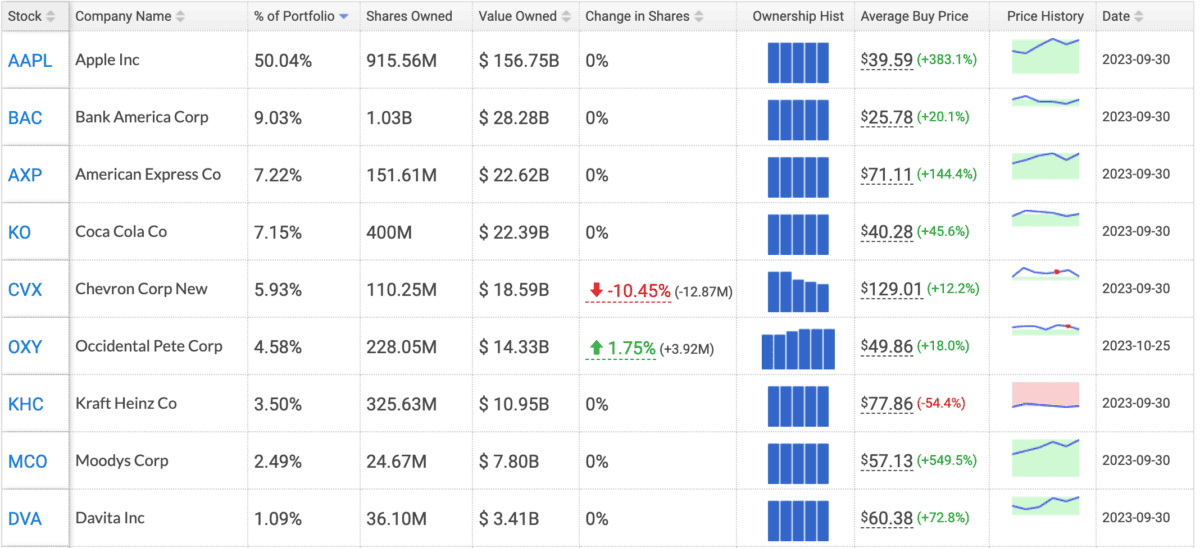
Source: Hedgefollow; Berkshire Hathaway holdings above 1% of total portfolio.

Compounding returns is central to Buffett’s success and it’s an important lesson for me. Consider this: by achieving a 10% annualised return, the growth of my portfolio outpaces the gradual accrual in a standard savings account.

It’s not just about the percentage itself, it’s about the cumulative impact over time.

This compounding effect transforms incremental gains into a powerful force that propels the portfolio forward at a faster pace.

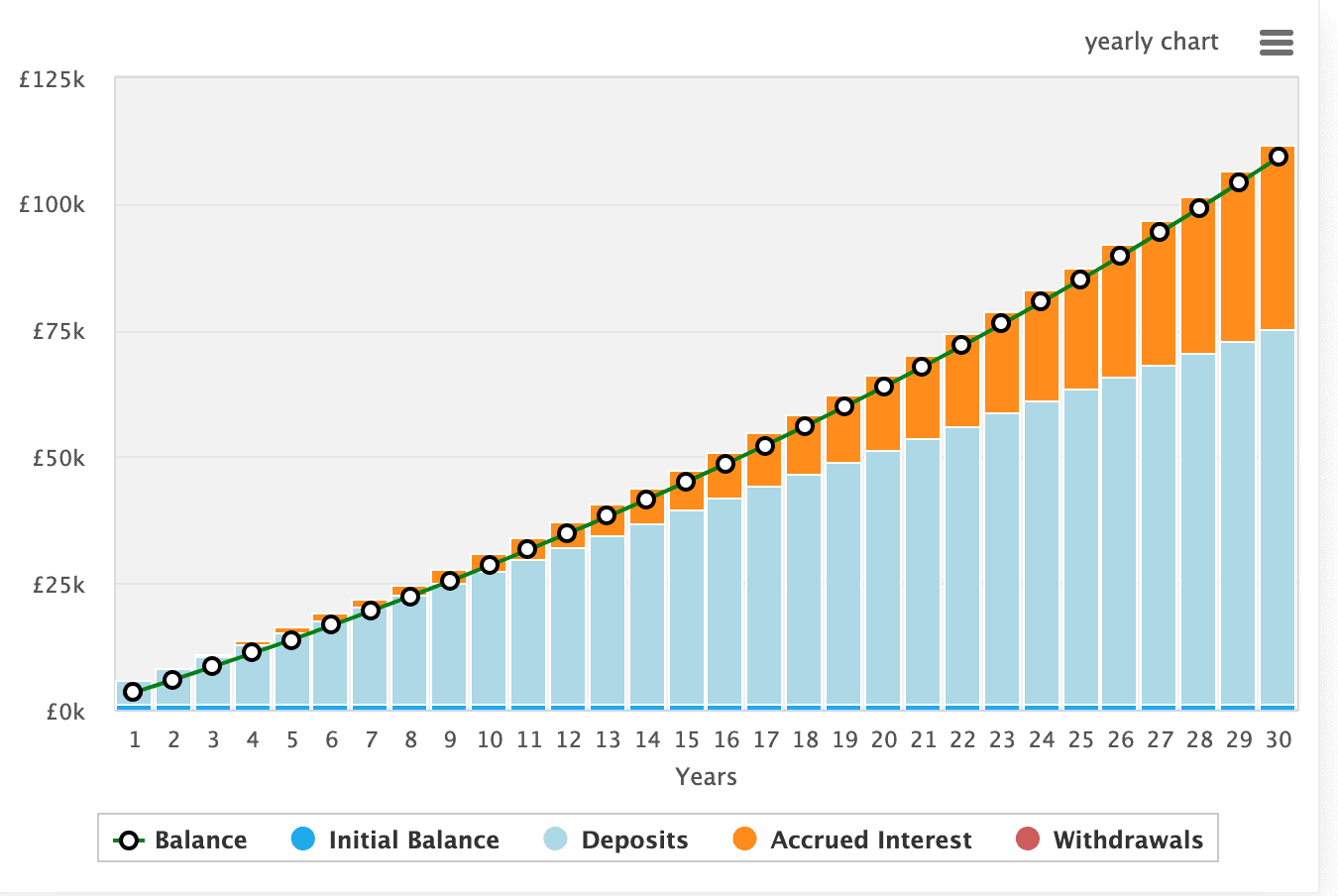
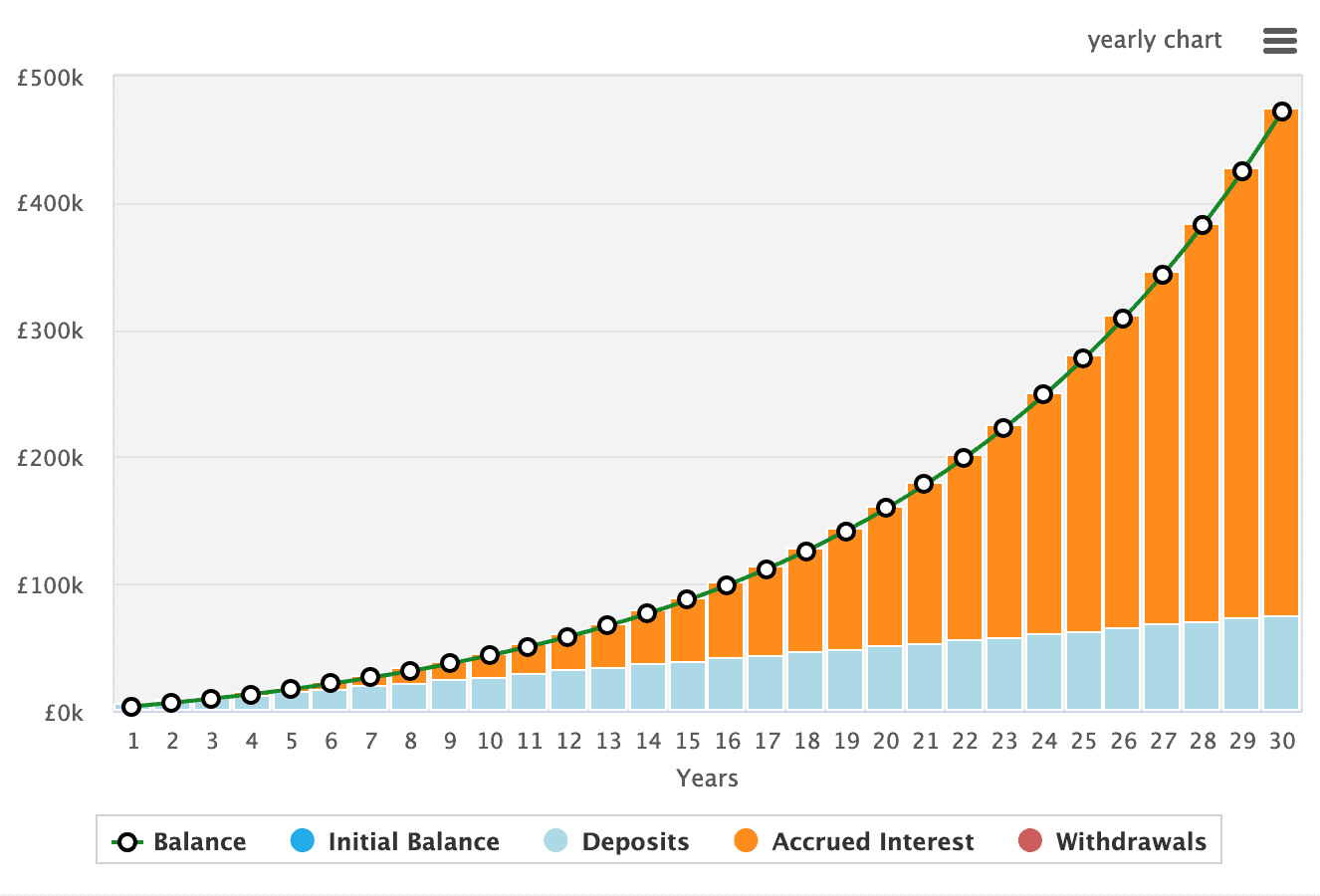
The two images in the slide below show the difference in long-term portfolio growth between a savings account at 2.5% and an investment portfolio growing at 10% annually.

In both examples, I’d be starting with £1,000 and investing £200 a month. When achieving 2.5% annually, I’d have £109k after 35 years. When achieving 10% annually, I’d have £471k after 35 years.
Source: thecalculatorsite.com

Investing risks

Of course, investing isn’t risk-free. And it’s very easy to lose money if I make the wrong investment decisions. Moreover, if I lose 50%, I’ve got to make 100% to get back to where I was. Thankfully, these days there’s a host of online resources to help us make the right decisions.


James Fox has no position in any of the shares mentioned. The Motley Fool UK has no position in any of the shares mentioned. Views expressed on the companies mentioned in this article are those of the writer and therefore may differ from the official recommendations we make in our subscription services such as Share Advisor, Hidden Winners and Pro. Here at The Motley Fool we believe that considering a diverse range of insights makes us better investors.

More on Investing Articles

Female student sitting at the steps and using laptop
Investing Articles

How much do you need in an ISA to target £8,333 a month of passive income?

Our writer explores a potential route to earning double what is today considered a comfortable retirement and all tax-free inside…

Read more »

Three signposts pointing in different directions, with 'Buy' 'Sell' and 'Hold' on
Investing Articles

Could these 3 FTSE 100 shares soar in 2026?

Our writer identifies a trio of FTSE 100 shares he thinks might potentially have more petrol in the tank as…

Read more »

Pakistani multi generation family sitting around a table in a garden in Middlesbourgh, North East of England.
Dividend Shares

How much do you need in a FTSE 250 dividend portfolio to make £14.2k of annual income?

Jon Smith explains three main factors that go into building a strong FTSE 250 dividend portfolio to help income investors…

Read more »

Tesla building with tesla logo and two teslas in front
Investing Articles

275 times earnings! Am I the only person who thinks Tesla’s stock price is over-inflated?

Using conventional measures, James Beard reckons the Tesla stock price is expensive. Here, he considers why so many people appear…

Read more »

Investing Articles

Here’s what I think investors in Nvidia stock can look forward to in 2026

Nvidia stock has delivered solid returns for investors in 2025. But it could head even higher in 2026, driven by…

Read more »

Investing Articles

Here are my top US stocks to consider buying in 2026

The US remains the most popular market for investors looking for stocks to buy. In a crowded market, where does…

Read more »

Investing Articles

£20,000 in excess savings? Here’s how to try and turn that into a second income in 2026

Stephen Wright outlines an opportunity for investors with £20,000 in excess cash to target a £1,450 a year second income…

Read more »

DIVIDEND YIELD text written on a notebook with chart
Investing Articles

Is a 9% yield from one of the UK’s most reliable dividend shares too good to be true?

Taylor Wimpey’s recent dividend record has been outstanding, but investors thinking of buying shares need to take a careful look…

Read more »