
The BP share price has dipped! Is this a buying opportunity?

Dr James Fox has been looking for an entry point to this hydrocarbons giant for some time. As the BP share price dips, should he buy?

| More on:

The content of this article was relevant at the time of publishing. Circumstances change continuously and caution should therefore be exercised when relying upon any content contained within this article.

Workers at Whiting refinery, US

Image source: BP plc

You’re reading a free article with opinions that may differ from The Motley Fool’s Premium Investing Services. Become a Motley Fool member today to get instant access to our top analyst recommendations, in-depth research, investing resources, and more. Learn More.

BP (LSE:BP) shares have fallen 13.1% over the past month, and that’s got me interested. I’ve had my eye on the stock for a while. Not because of the tailwind associated with current conflicts and geopolitical tensions, but for the growing demand for hydrocarbon products in an increasingly resource-scarce environment throughout the long term.

The demand hypothesis

While we’re looking towards greener energies to save the planet, it’s also the case that demand for hydrocarbon products will remain strong for the foreseeable future — this remains the company’s bread and butter.

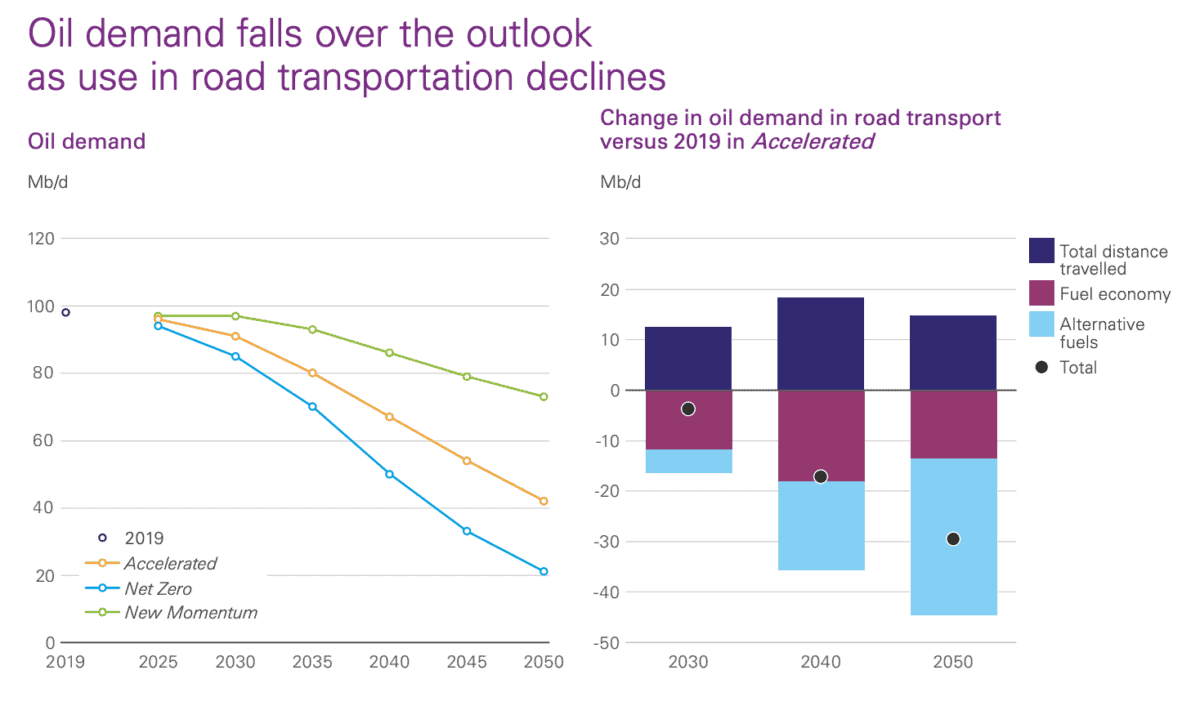
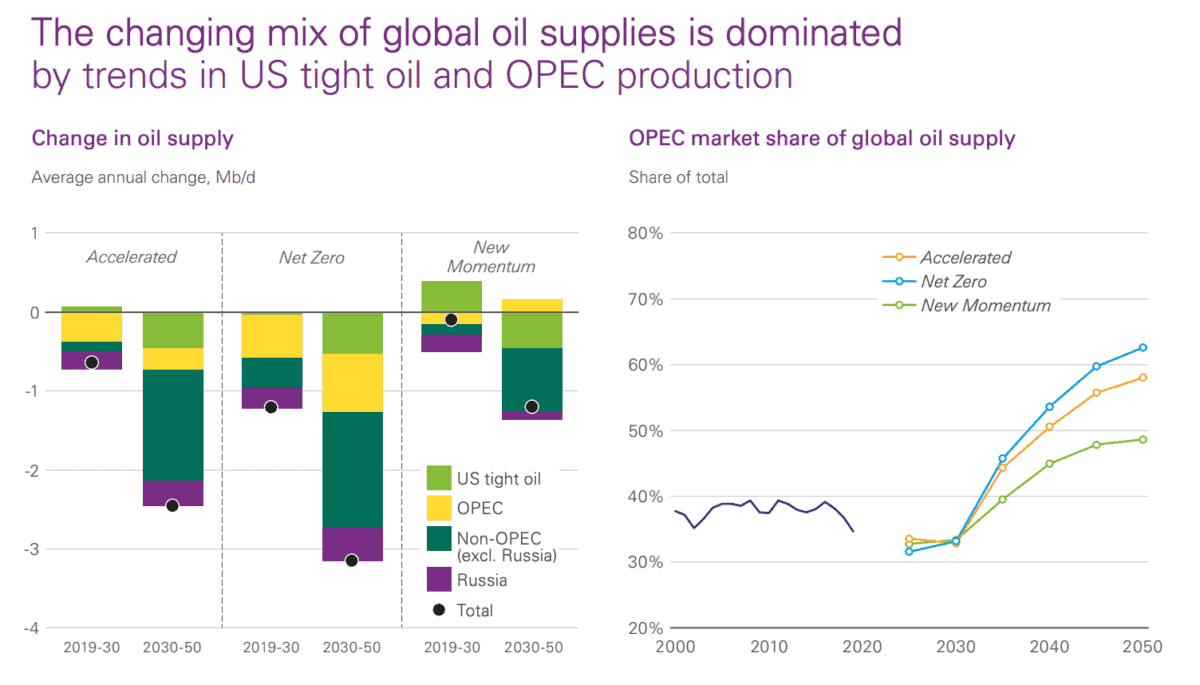
Looking across the next decade and beyond, oil prices are likely to be higher than they were over the past decade. That’s reflected in BP’s own forecasts.

This is because supply is unlikely to outstrip demand as black gold becomes scarcer. In fact, as we can see below, more oil production will originate from OPEC members’ cartel in the coming decades. Meanwhile, demand looks relatively robust. This will be driven by expanding global populations and burgeoning middle classes as the world ever-so-slowly shifts to greener alternatives.
Source: BP
Source: BP

A competitive advantage?

The data provides us with a mixed picture of BP versus the rest of the ‘Big Six’ vertically integrated peers.

To start, BP traditionally boasts a lower unit cost compared to its rivals. Over the period 2010-2019, BP’s 10-year average upstream unit production cost per barrel of oil equivalent was around 18% less than Shell.

When working in the industry and writing my PhD, I was frequently told that BP was at the forefront of technological advancements. This may contribute to its impressive return on total capital (TTM) at 16.7%, which surpasses peers.

However, when we look at metrics including asset turnover ratio and net income margin, BP appears less competitive. Historically, it has had the lowest gross profit margin of the supermajors, standing at 30.7% at the end of Q1.

This lower gross profit may change following the acquisition of aptly-named full-service truck stop and travel hubs TravelCenters of America in Q2. Analysts suggest the move could nearly double its global convenience gross margin with a network of 288 sites along US highways.

However, debt may be a concern for some investors. BP’s net debt to equity of 68% is the highest of its peer group. Much of this debt relates to the legacy Deepwater Horizon disaster.

Best value?

But BP also has the most favourable valuation metrics versus the rest of the Big Six, even when we take into account its higher debt burden.

The London-based company’s price-to-earnings ratio of 4.2 times sits far below its peers including ExxonMobil at 10.2 and Chevron at 10.7.

On a forward basis, BP still looks cheap, trading at 5.7 times earnings, which still puts it at a discount to its nearer peer Total at 7.1 times.

The same trend is true when using the EV-to-EBITDA ratio. BP trades at 3.31 times on a forward basis, which is also cheaper than Total at 3.7 times.

Given these metrics, I’ll look to add BP to my portfolio when possible.

James Fox has no position in any of the shares mentioned. The Motley Fool UK has no position in any of the shares mentioned. Views expressed on the companies mentioned in this article are those of the writer and therefore may differ from the official recommendations we make in our subscription services such as Share Advisor, Hidden Winners and Pro. Here at The Motley Fool we believe that considering a diverse range of insights makes us better investors.

More on Investing Articles

Investing Articles

The key number that could signal a recovery for the Greggs share price in 2026

The Greggs share price has crashed in 2025, but is the company facing serious long-term challenges or are its issues…

Read more »

Rolls-Royce's Pearl 10X engine series
Investing Articles

Can the Rolls-Royce share price hit £16 in 2026? Here’s what the experts think

The Rolls-Royce share price has been unstoppable. Can AI data centres and higher defence spending keep the momentum going in…

Read more »

Businessman with tablet, waiting at the train station platform
Investing Articles

Up 150% in 5 years! What’s going on with the Lloyds share price?

The Lloyds share price has had a strong five years. Our writer sees reasons to think it could go even…

Read more »

Investing Articles

Where will Rolls-Royce shares go in 2026? Here’s what the experts say!

Rolls-Royce shares delivered a tremendous return for investors in 2025. Analysts expect next year to be positive, but slower.

Read more »

Emma Raducanu for Vodafone billboard animation at Piccadilly Circus, London
Investing Articles

Up 40% this year, can the Vodafone share price keep going?

Vodafone shareholders have been rewarded this year with a dividend increase on top of share price growth. Our writer weighs…

Read more »

Buffett at the BRK AGM
Investing Articles

Here’s why I like Tesco shares, but won’t be buying any!

Drawing inspiration from famed investor Warren Buffett's approach, our writer explains why Tesco shares aren't on his shopping list.

Read more »

Investing For Beginners

If the HSBC share price can clear these hurdles, it could fly in 2026

After a fantastic year, Jon Smith points out some of the potential road bumps for the HSBC share price, including…

Read more »

Investing Articles

I’m thrilled I bought Rolls-Royce shares in 2023. Will I buy more in 2026?

Rolls-Royce has become a superior company, with rising profits, buybacks, and shares now paying a dividend. So is the FTSE…

Read more »