
10.5% yield! Here’s what the charts say for the Vodafone dividend

The Vodafone dividend looks huge right now after passing the 10% mark. Do these four charts make it look like a great buy? Or one to be avoided?

| More on:

The content of this article was relevant at the time of publishing. Circumstances change continuously and caution should therefore be exercised when relying upon any content contained within this article.

Smiling white woman holding iPhone with Airpods in ear

Image source: Getty Images

You’re reading a free article with opinions that may differ from The Motley Fool’s Premium Investing Services. Become a Motley Fool member today to get instant access to our top analyst recommendations, in-depth research, investing resources, and more. Learn More.

A 10.5% yield! That’s how high the Vodafone (LSE: VOD) dividend has risen. It’s eye-catching, for sure, but is it a good buy?

To answer, I won’t be focusing on the short term. A single year can be misleading, and the last thing I want to do is throw my money in at the top only to see the dividend slashed and my shares tumble in value. 

What I’ll do instead is zoom out a little. Doing this, with the help of charts made at TradingView, I can spots trends in that dividend. Those trends can help me see how reliable that 10% payout is. And in Vodafone’s case, I think these four charts give a very revealing answer. 

What do the charts say?
Source: TradingView

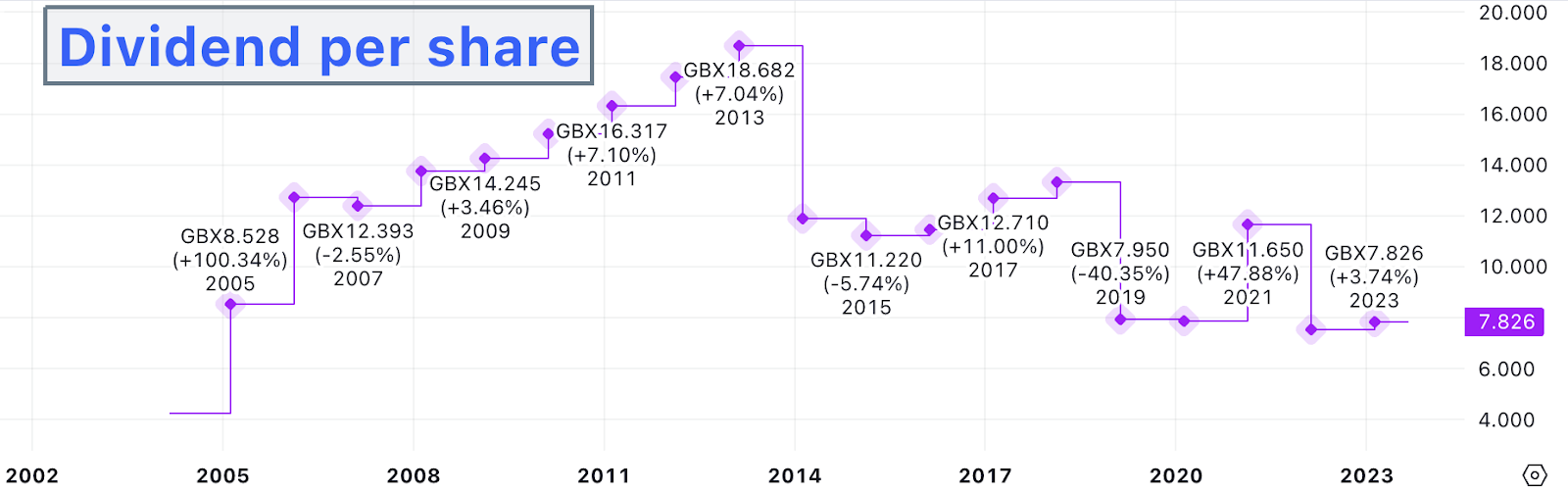
This first chart shows dividend per share. The striking detail here is that it has barely increased for years. Remember, Vodafone reports in euros, so some of the change in that graph will be due to currency conversion. 

The cut in 2020 was understandable. Lots of companies did the same due to Covid. Still, the dividend does seem to be stagnating. 

Not a good start, but this alone is not enough information to make a decision. Let’s explore further. 
Source: TradingView

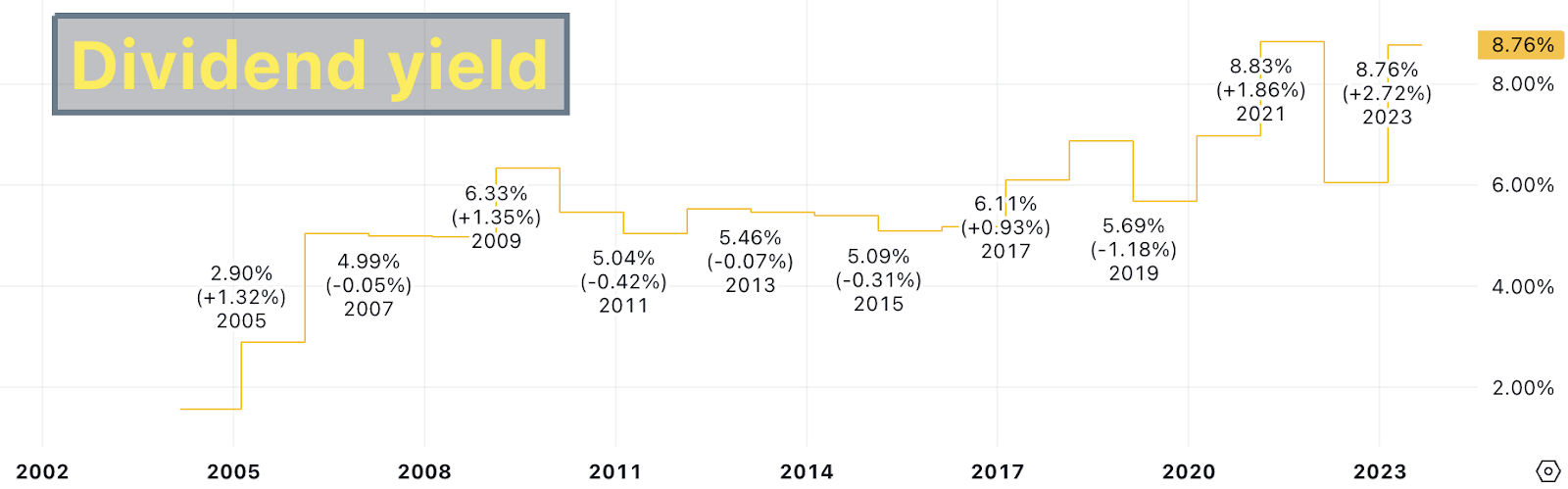
The next chart shows the dividend yield. So this is the yearly percentage return I’d get back from any investment. As we can see, it’s higher than ever. The last ‘step’ on the chart doesn’t even include the latest rise to over 10%. 

Is this good? Not really. The current yield is far higher than historic levels, a red flag that investors aren’t confident in the stock. And based purely on this chart, a 5%-6% yield is more what I’d expect over the long run.

Source: TradingView

This third chart shows the dividend payout ratio. This is the percentage of earnings used to pay the dividend. And that wonky graph tells a story all on its own. 

For 2021, the firm reported very low earnings which is why it’s so high. For 2020 and 2022, the ratio was above 100%, so the company didn’t make enough profits to cover the dividend. The 2023 ratio would have been over 100% too if it weren’t for the one-off €9bn disposal of one of its German operations.

In short, Vodafone hasn’t been earning enough to pay its dividends. And that brings me onto the last and perhaps most revealing chart.
Source: TradingView

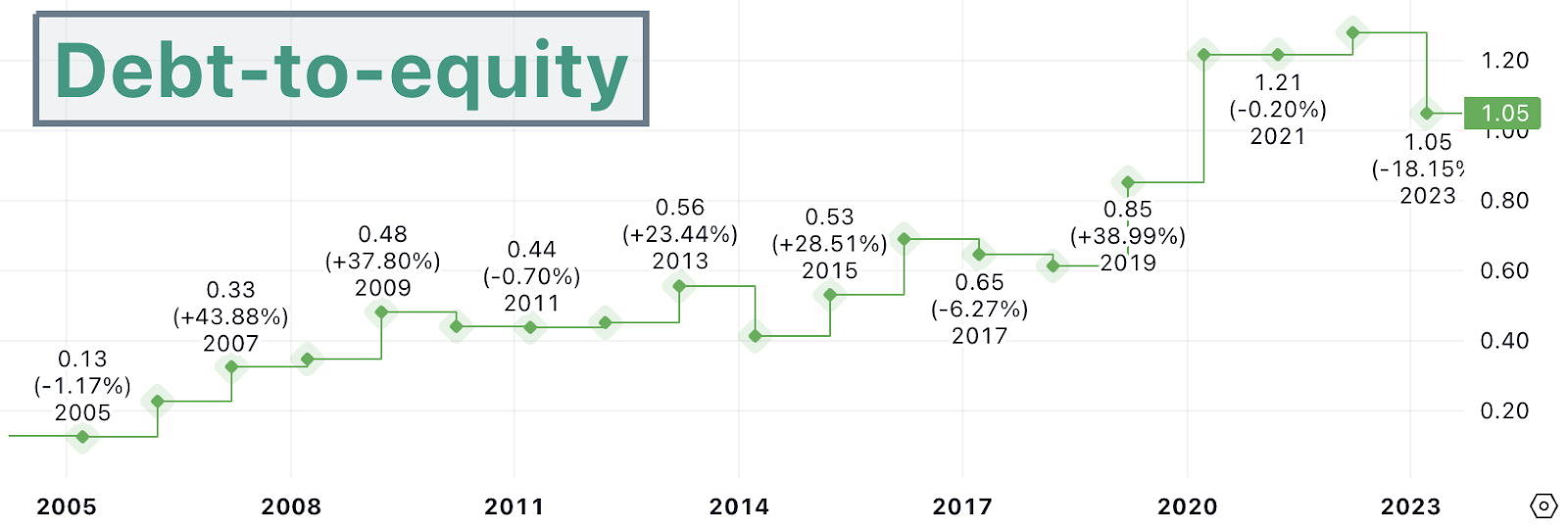
This final chart shows Vodafone’s debt-to-equity (D/E). This is how much debt the firm is in compared to the total shareholder equity. Because it’s a ratio, we can easily compare debt from year to year.

Clearly, debt levels are high right now. That’s not great for the dividend as future earnings may need to be diverted to pay down the debt or to cover financing. I will say though that competitor BT has an even higher D/E of 1.6 right now. So perhaps Vodafone’s debt isn’t too unreasonable.

A buy? 

Taken together, do these charts say that Vodafone is a good buy? Well, I’d have to say no. They show the firm has its work cut out to keep up with those high dividends and that 10%+ yield looks like it’s on shaky ground to me. I’ll be avoiding.


John Fieldsend has no position in any of the shares mentioned. The Motley Fool UK has recommended Vodafone Group Public. Views expressed on the companies mentioned in this article are those of the writer and therefore may differ from the official recommendations we make in our subscription services such as Share Advisor, Hidden Winners and Pro. Here at The Motley Fool we believe that considering a diverse range of insights makes us better investors.

More on Investing Articles

Investing Articles

The key number that could signal a recovery for the Greggs share price in 2026

The Greggs share price has crashed in 2025, but is the company facing serious long-term challenges or are its issues…

Read more »

Rolls-Royce's Pearl 10X engine series
Investing Articles

Can the Rolls-Royce share price hit £16 in 2026? Here’s what the experts think

The Rolls-Royce share price has been unstoppable. Can AI data centres and higher defence spending keep the momentum going in…

Read more »

Businessman with tablet, waiting at the train station platform
Investing Articles

Up 150% in 5 years! What’s going on with the Lloyds share price?

The Lloyds share price has had a strong five years. Our writer sees reasons to think it could go even…

Read more »

Investing Articles

Where will Rolls-Royce shares go in 2026? Here’s what the experts say!

Rolls-Royce shares delivered a tremendous return for investors in 2025. Analysts expect next year to be positive, but slower.

Read more »

Emma Raducanu for Vodafone billboard animation at Piccadilly Circus, London
Investing Articles

Up 40% this year, can the Vodafone share price keep going?

Vodafone shareholders have been rewarded this year with a dividend increase on top of share price growth. Our writer weighs…

Read more »

Buffett at the BRK AGM
Investing Articles

Here’s why I like Tesco shares, but won’t be buying any!

Drawing inspiration from famed investor Warren Buffett's approach, our writer explains why Tesco shares aren't on his shopping list.

Read more »

Investing For Beginners

If the HSBC share price can clear these hurdles, it could fly in 2026

After a fantastic year, Jon Smith points out some of the potential road bumps for the HSBC share price, including…

Read more »

Investing Articles

I’m thrilled I bought Rolls-Royce shares in 2023. Will I buy more in 2026?

Rolls-Royce has become a superior company, with rising profits, buybacks, and shares now paying a dividend. So is the FTSE…

Read more »