This Warren Buffett share yields 3%. Why does he own it?

Warren Buffett has held on to a share that yields less than headline interest rates and has fallen 3% in the past year. Christopher Ruane considers why.

| More on:

The content of this article was relevant at the time of publishing. Circumstances change continuously and caution should therefore be exercised when relying upon any content contained within this article.

You’re reading a free article with opinions that may differ from The Motley Fool’s Premium Investing Services. Become a Motley Fool member today to get instant access to our top analyst recommendations, in-depth research, investing resources, and more. Learn More.

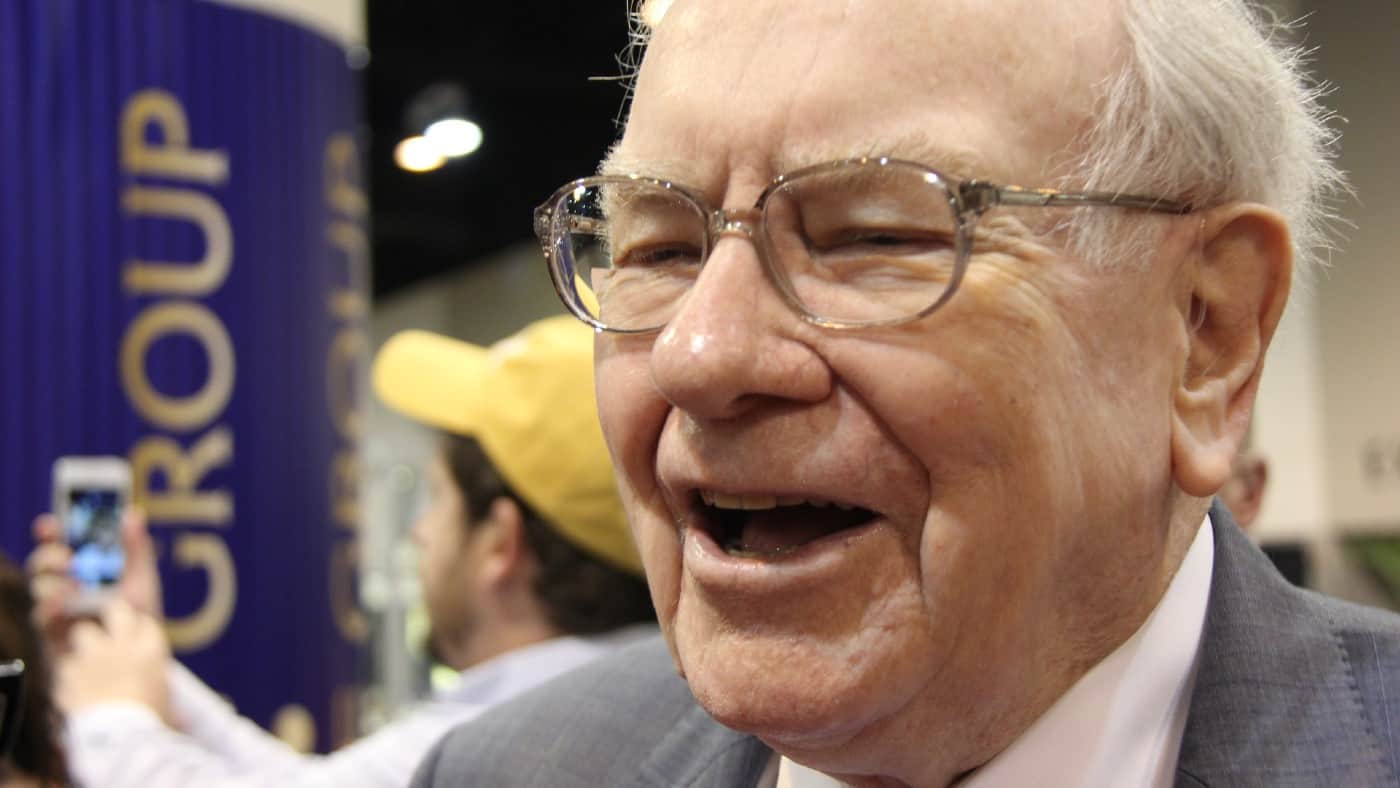
Buffett at the BRK AGM

Image source: The Motley Fool

In an economy where interest rates are in mid-single digits, owning a share yielding 3% could be less rewarding than putting the money in a bank account. Owning a share also carries a risk of capital loss that most bank accounts do not. Yet billionaire investor Warren Buffett is an enthusiastic owner of such a share.

Why would he do that rather than sell the share and put the money in a bank account?

Understanding Buffett’s possible logic here helps explain a lot about his approach to investing.

Iconic business

The company in question is Coca-Cola (NYSE: KO). A yield of 3% is not excitingly high, in my opinion, but it is also higher than a lot of other well-known US shares offer. On top of that, the company is a Dividend Aristocrat that has raised its shareholder payout annually for six decades.

Over the past year, the shares have fallen 3%. But they still trade on a price-to-earnings (P/E) ratio of 26, which I regard as expensive. Buffett does not have a strict rule on P/E ratios but it has been rare for him to pay more than 15. On that basis, Coca-Cola shares look expensive.

Long-term approach

The valuation of Coca-Cola shares today may look pricy. But Buffett stopped building his stake decades ago. So from a buying perspective, today’s valuation does not matter to him.

What about selling? After all, an expensive valuation from a purchaser’s perspective could offer an attractive opportunity as a seller.

Despite the price moving downwards in the past year, Coca-Cola shares are 33% higher than they were five years ago.

Buffett paid $1.3bn for those shares in the 1980s and 1990s. Now they are worth over $24bn. By selling, he could cash in. He would then have $24bn he could invest in cheap shares of other companies.

But Buffett is a believer in long-term investing. He is not a trader but an investor. Coca-Cola ticks many boxes of how he assesses a company. It has a large potential market and unique, competitive advantages in that market.

So far, the value of his stake has increased dramatically. The characteristics that make it a great business could mean the shares increase substantially in coming decades too, even if today’s valuation is too high for my tastes.

Cash gusher

The prospective yield would only be 3% if I buy today.

But remember, Buffett bought long ago. So the yield he earns on his stake is different. Last year, his firm Berkshire Hathaway received $704m in dividends from its Coca-Cola shareholding. Based on the purchase price, that is a dividend yield of around 54%!

Buying a great company with a business that enables it to grow its dividend annually, then holding it for decades as Buffett has done, can mean a huge yield down the line.


C Ruane has no position in any of the shares mentioned. The Motley Fool UK has no position in any of the shares mentioned. Views expressed on the companies mentioned in this article are those of the writer and therefore may differ from the official recommendations we make in our subscription services such as Share Advisor, Hidden Winners and Pro. Here at The Motley Fool we believe that considering a diverse range of insights makes us better investors.

More on Investing Articles

Investing Articles

£10,000 buys 373 shares in this FTSE 100 heavyweight that’s tipped to surve in 2026

With analysts expecting the stock to climb 54% in the next 12 months, is now the perfect time for investors…

Read more »

This way, That way, The other way - pointing in different directions
Investing Articles

Are BP shares a slam-dunk buy as oil prices rocket – or is there a hidden danger?

As the oil price rises, investors might expect BP shares to follow. But Harvey Jones warns it may not play…

Read more »

Investing Articles

2 growth stocks to consider buying for an ISA in March

Here are two growth stocks I think are worth considering buying. Both have stumbled recently, even though the underlying businesses…

Read more »

Close-up of a woman holding modern polymer ten, twenty and fifty pound notes.
Investing Articles

How long might a Stocks and Shares ISA take to earn a £950 monthly second income?

Christopher Ruane explains how someone could seek to turn a Stocks and Shares ISA into a source of monthly passive…

Read more »

British pound data
Investing Articles

Get yourself ready for a violent stock market crash!

The FTSE 100 is sinking, raising fears of a fresh stock market crash. What are you doing about it? Here's…

Read more »

ISA Individual Savings Account
Investing Articles

Hands up, who’s dreaming of a million in a Stocks and Shares ISA?

How to make a million in a Stocks and Shares ISA, that's what headlines keep banging on about. Let's look…

Read more »

British Pennies on a Pound Note
Investing Articles

OK, who’s dreaming of making a million from red-hot penny shares?

Investors in penny shares can sound like the most upbeat optimists there are. It can work, but hopes need to…

Read more »

Three generation family are playing football together in a field. There are two boys, their father and their grandfather.
Investing Articles

Could this ultra-high-yielding FTSE 100 passive income gem quietly fund my retirement?

With rising payouts, strong cash generation and impressive earnings forecasts, this FTSE 100 dividend gem may be developing into a…

Read more »