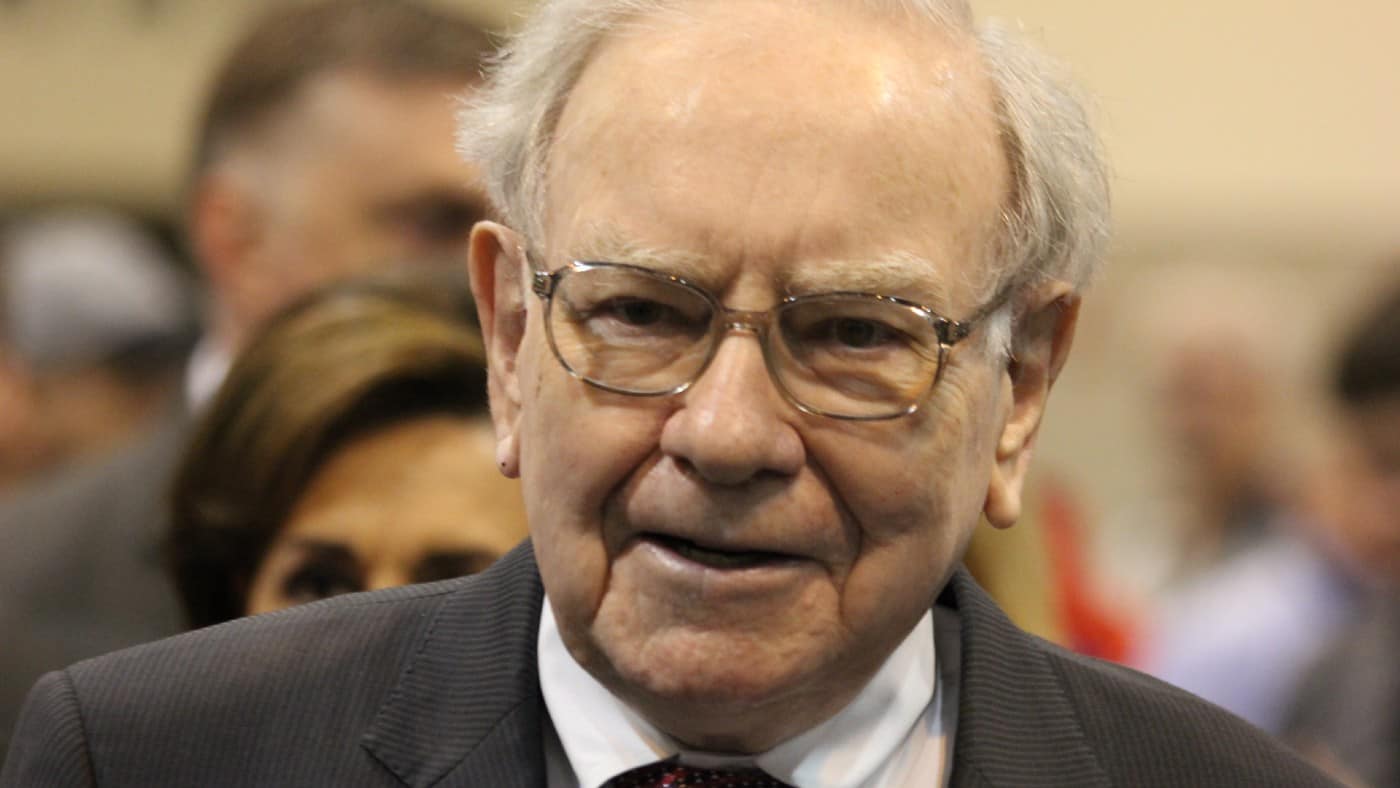
Legendary investor Warren Buffett is still working hard in his 90s despite having ample means for a comfortable retirement. Many investors in his position would be happy to reap the rewards of their investments and settle down into comfortable retirement. I know I would. Fortunately, following Buffett’s advice, I think it can be easier for me to achieve that. Here are seven straightforward tips from Buffett that I reckon could help me retire earlier.
1. Staying inside one’s circle of competence
Buffett repeatedly emphasises the importance of staying inside one’s circle of competence. In other words, he thinks investors ought not to stray from fields they understand, no matter how attractive the potential returns may seem. Buffett also emphasises that this is true even if one’s circle of competence is small. He said, “Know your circle of competence, and stick within it. The size of that circle is not very important; knowing its boundaries, however, is vital”.
Why is this so important, in Buffett’s view? As the old proverb goes, “a fool and his money are soon parted”. That is true not just of (lowercase) fools, but also of smart people who do not know what they are doing. To make an investment, it is important to be able to weigh the risks and opportunities well. That relies on having the right knowledge and understanding to do so in the first place.
2. Keeping things simple
A common management mantra is “Keep things simple”. Buffett applies this to his investment decisions. From the types of companies in which he invests to the way he structures his investments, Buffett’s approach eschews complex high finance. Much of what he does is what an ordinary private investor might do, albeit on a larger scale. For example, Buffett decided he liked the business model and profit potential at Apple, so he bought shares in the company. Admittedly, Buffett’s stake of over $100bn is massive. But the process he went through, from decision making to buying ordinary shares on the stock market, is the same as millions of retail investors who own a bit of Apple.
Why is keeping things simple important in Buffett’s worldview? Basically, he emphasises that the work of an investor is to buy a share of a great company at a good price. To do so typically requires being able to form a clear view of the company and its industry. That’s harder to do when things aren’t simple, for example if the company uses esoteric accounting methods.
3. Honest self-assessment
A rising tide lifts all boats. That old saw applies to the stock market too. But, as Buffett says, when the tide goes out we gets to see who has been swimming naked.
For years there has been a bull market overall, albeit 2020 saw a reversal for a while. A common mistake investors make in bull markets is thinking they are better than they are. They attribute strong performance to their own share picking prowess, rather than recognising the benefit they have received from being in an overall bull market.
That can lead to a skewed assessment of our capabilities or risk tolerance as investors. Over the long term, that can hurt, not help, our retirement planning. The stock market is cyclical, so after a bull market there will usually be a bear market, which continues until at some stage in the future things get bullish again. The clearer we are about the real reasons for our investment performance, the easier it is to change that performance in future. It is no coincidence that Buffett is so open about his failures as well as his successes.
4. Playing the long game
The difference between a good investment and a great one is often simply time.
A share that goes up massively in short order after buying it is what many investors dream about. But in some cases, such dramatic price swings are closer to speculation than investment. Buffett tries to pick companies that he thinks have good long-term business prospects, then sits back and lets those prospects bear fruit over time.
As well as hopefully improving long-term investment returns, sticking with a few great performers can also reduce trading costs. It also cuts the amount of time spent following ups and downs in the market.
5. Warren Buffett has an investment theory
A lot of investors buy or sell shares based on the shares’ individual prospects. But they don’t develop an overall investment theory. By contrast, Warren Buffett has a clear conceptual model for how he approaches investment. From sticking to things he knows to looking at how wide a company’s competitive advantage or ‘moat‘ is likely to be in the future, Buffett relies on a certain approach to investing. That informs his asset allocation decisions.
We don’t need to have the same theory about investing as Buffett to do as well as he has. But I think it’s helpful at least to have a theory. Starting with even a simple one is helpful. Based on our experience, it can be refined over time. That can provide discipline and force us to analyse what has worked best about our approach so far and why. Over the long term, such self-reflection will hopefully improve our investment performance.
6. Diversification
As shown by his Apple stake, when Buffett likes a company he is willing to go in on a large scale. So, why did Buffett scale back his Apple holding last year while still keeping most of it? Surely if he had turned negative, he could have sold the whole stake?
I think the answer is that Buffett is too smart an investor to put all his eggs in one basket. He recognises that a simple but powerful form of risk management for an investor is to diversify across different companies and business sectors. No matter how great one company’s performance has been or promises to be in future, events can always get in the way unexpectedly. Like Buffett, I make sure to spread my investments across multiple shares and lines of business to help reduce my risk if any one company underperforms. In the short term, that can mean I miss out on benefitting more from some great opportunities. But building a richer retirement is a marathon, not a sprint.