Is the 6.9% yield on the Vodafone share price safe?

Rupert Hargreaves explains why he thinks the 6.9% yield on the Vodafone share price could be at risk, considering upcoming headwinds.

| More on:

The content of this article was relevant at the time of publishing. Circumstances change continuously and caution should therefore be exercised when relying upon any content contained within this article.

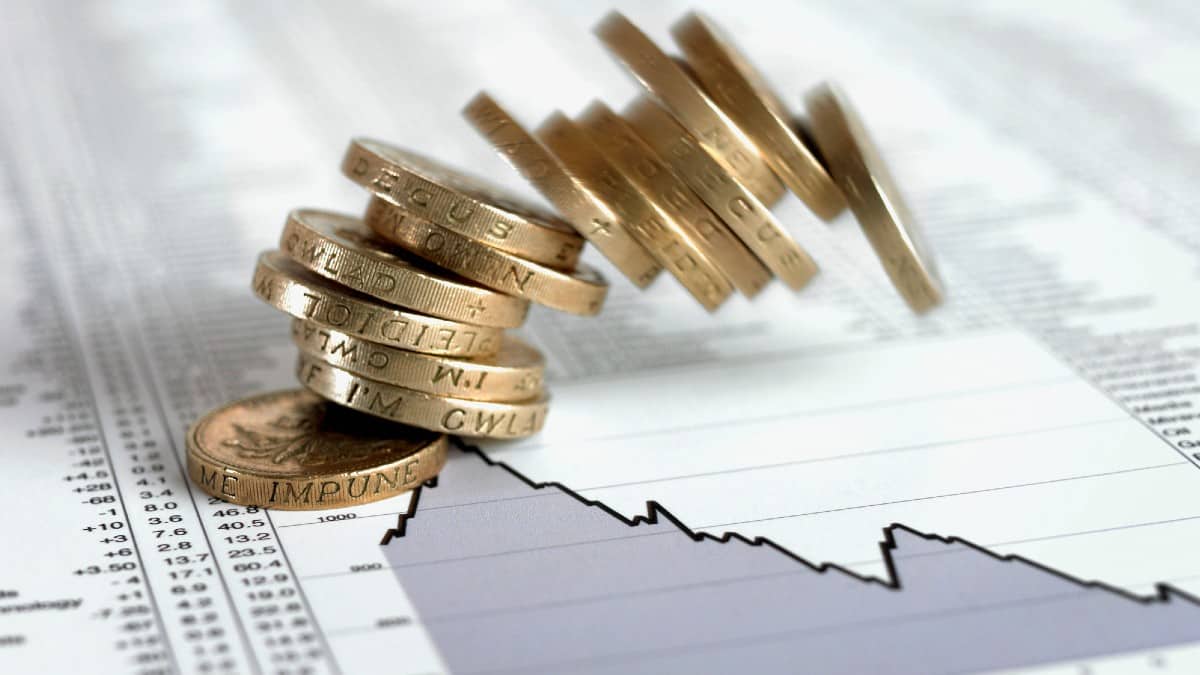
Stack of British pound coins falling on list of share prices

Image source: Getty Images

You’re reading a free article with opinions that may differ from The Motley Fool’s Premium Investing Services. Become a Motley Fool member today to get instant access to our top analyst recommendations, in-depth research, investing resources, and more. Learn More.

The Vodafone (LSE: VOD) share price looks incredibly attractive as an income investment. At the time of writing, the stock supports a dividend yield of 6.9%. That is nearly double the FTSE 100 average. 

However, a market-beating dividend yield like this can signify that investors do not believe the payout is sustainable. If investors do not trust the dividend, they will sell the stock. This will push the share price lower and the yield higher. 

A fine line

As I noted in a previous article, Vodafone is trying to balance shareholder distributions and capital spending. This is a fine line to tread. The company has already had to reduce its dividend once in the past five years.

In the 2018/19 calendar year (Vodafone’s financial year ends in March), the group reduced its full-year per share dividend by 40%. Management needed to cut payout as earnings fell and the company was spending more on infrastructure. 

I think there is a growing chance investors could be subject to yet another cut. In the company’s financial year to the end of March, operating cash flow from operations totalled €3.1bn. From this balance, the group paid out €2.4bn in dividends to investors. 

Granted, last year was an exceptional one. Vodafone reported a net loss for the year of €1bn, due to the impact of the pandemic on its business. By comparison, for the 2020 financial year, operating cash flow totalled €5bn. 

For a company like Vodafone, which owns large amounts of costly capital equipment, looking at operating cash flow rather than net income can provide a better gauge of its financial position. That is why I like to consider operating cash flow when evaluating the sustainability of its dividend. 

Assuming the group’s operating cash flow returns to fiscal 2020 levels, its dividend does look sustainable in the near term at least.

Vodafone share price risks 

But this is without giving any consideration to the group’s enormous debt pile. In November last year, debt totalled €41bn (£34bn), up from €27bn in 2019.

Meanwhile, management has been taking action to reduce debt. The company has spun off its tower business and has been slashing costs to increase cash flow. The results of these initiatives should begin to emerge over the next year, or so.

However, the spectre of higher interest rates is looming large on the horizon. If central banks do begin to increase interest rates, the company’s interest bill could increase. And that would only make it harder for Vodafone to balance debt repayments, capital spending and shareholder returns.

Overall, Vodafone’s share price looks sustainable, based on the company’s current financials. Nevertheless, there are plenty of risks on the horizon that could present a threat to the distribution. 

With this in mind, I would not buy the stock as an income investment. I think there are plenty of other companies out there on the market, which offer a similar level of return, but with less risk for investors. 

Rupert Hargreaves has no position in any of the shares mentioned. The Motley Fool UK has no position in any of the shares mentioned. Views expressed on the companies mentioned in this article are those of the writer and therefore may differ from the official recommendations we make in our subscription services such as Share Advisor, Hidden Winners and Pro. Here at The Motley Fool we believe that considering a diverse range of insights makes us better investors.

More on Investing Articles

Investing Articles

The key number that could signal a recovery for the Greggs share price in 2026

The Greggs share price has crashed in 2025, but is the company facing serious long-term challenges or are its issues…

Read more »

Rolls-Royce's Pearl 10X engine series
Investing Articles

Can the Rolls-Royce share price hit £16 in 2026? Here’s what the experts think

The Rolls-Royce share price has been unstoppable. Can AI data centres and higher defence spending keep the momentum going in…

Read more »

Businessman with tablet, waiting at the train station platform
Investing Articles

Up 150% in 5 years! What’s going on with the Lloyds share price?

The Lloyds share price has had a strong five years. Our writer sees reasons to think it could go even…

Read more »

Investing Articles

Where will Rolls-Royce shares go in 2026? Here’s what the experts say!

Rolls-Royce shares delivered a tremendous return for investors in 2025. Analysts expect next year to be positive, but slower.

Read more »

Emma Raducanu for Vodafone billboard animation at Piccadilly Circus, London
Investing Articles

Up 40% this year, can the Vodafone share price keep going?

Vodafone shareholders have been rewarded this year with a dividend increase on top of share price growth. Our writer weighs…

Read more »

Buffett at the BRK AGM
Investing Articles

Here’s why I like Tesco shares, but won’t be buying any!

Drawing inspiration from famed investor Warren Buffett's approach, our writer explains why Tesco shares aren't on his shopping list.

Read more »

Investing For Beginners

If the HSBC share price can clear these hurdles, it could fly in 2026

After a fantastic year, Jon Smith points out some of the potential road bumps for the HSBC share price, including…

Read more »

Investing Articles

I’m thrilled I bought Rolls-Royce shares in 2023. Will I buy more in 2026?

Rolls-Royce has become a superior company, with rising profits, buybacks, and shares now paying a dividend. So is the FTSE…

Read more »