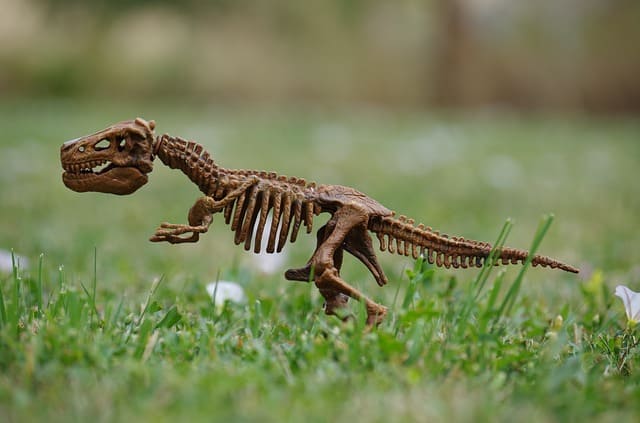
Dinosaur fund managers will eat your wealth

Fund managers are heading for extinction, all in the name of evolution

The content of this article was relevant at the time of publishing. Circumstances change continuously and caution should therefore be exercised when relying upon any content contained within this article.

You’re reading a free article with opinions that may differ from The Motley Fool’s Premium Investing Services. Become a Motley Fool member today to get instant access to our top analyst recommendations, in-depth research, investing resources, and more. Learn More.

CCO Public Domain

Active fund managers once ruled the earth, but now they are heading for extinction. And the sooner most of them die out, the better.

Recently, I revealed that 98% of US fund managers trailed the benchmark S&P Global 1200 index over 10 years.

Even more shockingly, every single active emerging market fund failed to beat their benchmark. That’s right, every single one.

Asset managers are still kings of all they survey, charging hefty fees and enjoying lavish lifestyles at investors’ expense, but now their days are numbered. Evolution is finally catching up with them.

Mass extinction

Fund managers aren’t the large-brained, nimble-footed mammals that investors have been led to believe.

Quite the reverse: they are dinosaurs. And like the dinosaurs, they are heading for extinction.

New figures from S&P show that more than half of all equity funds have died out in the last 10 years.

Its SPIVA Europe Scorecard found that of the 535 UK equity funds that were active in 2006, only 46% were still alive last year.

Life expectancy is even shorter in Europe, with only 39% living for a decade, and 41% in the US. The death rate is brutal.

In fact, I’m being unfair to dinosaurs: they roamed the earth for 350 million years, equity funds are lucky to last a decade.

S&P says reason they are being culled due to “continued underperformance”. It’s that simple.

Dying out

Ironically, this high extinction rate makes active fund performance look better than it really is. When judging active fund performance, too many people only look at the survivors, the dead are conveniently forgotten, which distorts overall performance in their favour.

S&P’s figures do allow for this “survivorship bias”, and expose active funds as the cold-blooded, slow-brained plodders they truly are.

Mass extinction

The dwindling number of investment industry professionals who still defend active funds like to point to the winners, the small breed of managers who regularly do beat the market.

At the same time they conveniently ignore the far larger number of losers, those destined to die, unmourned, in the great investment fund graveyard.

However, the message is steadily getting through, which explains the dramatic surge in popularity of exchange traded funds (ETFs).

These low-cost trackers, which can be bought and sold like shares, can never beat the market but nor can they underperform either. They are killing off active fund managers in the same way the meteor strike did for the dinosaurs.

Take control

It also explains why more investors now choose to build their own portfolio of stocks and shares, and live or die by their own decisions, rather than pay a fund manager to do the work on their behalf (and almost certainly fail).

It pays to keep a closer eye on your investment decisions. The alternative is to watch your portfolio go the way of the dinosaurs.


More on Investing Articles

UK financial background: share prices and stock graph overlaid on an image of the Union Jack
Investing Articles

Why is the FTSE 100 suddenly beating the S&P 500?

The UK's blue-chip index has been on fire over the past couple of years, helping it catch up to the…

Read more »

Artillery rocket system aimed to the sky and soldiers at sunset.
Investing Articles

This non-oil FTSE stock’s risen 4.6% in 3 days. What’s going on?

Against the backdrop of trouble in the Middle East, James Beard investigates why this FTSE 100 stock’s doing so well.…

Read more »

Three signposts pointing in different directions, with 'Buy' 'Sell' and 'Hold' on
Investing Articles

Has a 2026 stock market crash just come a whole lot closer?

If we're in for a stock market crash, what's the best way for us to prepare, and what kinds of…

Read more »

Silhouette of a bull standing on top of a landscape with the sun setting behind it
Investing Articles

Up 79% in a year, this FTSE 250 stock still gets a resounding Strong Buy from analysts

This under-the-radar growth stock in the FTSE 250 has been on fire over the past 12 months. Why are City…

Read more »

Frustrated young white male looking disconsolate while sat on his sofa holding a beer
Investing Articles

Vistry shares down 20%! Here’s what I’m doing…

Vistry shares have crashed as the firm cuts prices and moves away from share buybacks. But is Stephen Wright’s long-term…

Read more »

UK financial background: share prices and stock graph overlaid on an image of the Union Jack
Investing Articles

The IAG share price is climbing today despite war fears – what’s going on?

It's been a tough week for the IAG share price and Harvey Jones expects more volatility. Yet the FTSE 100…

Read more »

Businessman with tablet, waiting at the train station platform
Investing Articles

By March 2027, £1,000 invested in Natwest shares could turn into…

NatWest shares have been on a tear in recent years. What might the next 12 months have in store for…

Read more »

many happy international football fans watching tv
Investing Articles

With a P/E of 6.6, does this FTSE 100 stock offer amazing value?

Despite appearing to offer tremendous value, investors are overlooking this well-known FTSE 100 stock. James Beard looks at the reasons…

Read more »