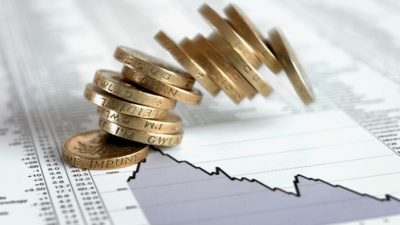
When it comes to investing, currency matters. Yet too many investors simply fail to take foreign exchange movements into account.
Perhaps some find it too complicated. Others may think currency swings won’t affect them, because they only invest in their home country.
But foreign exchange will have a major impact on your long-term returns, especially in days like these, when markets are highly volatile.
Cheap and cheerful
You only have a look at post-Brexit Britain to see the impact a sharp currency swing can have on stock markets.
When Britons shocked the world by voting to leave the EU on 23 June, the pound crashed.
Some expected stock markets to crash as well, but instead a strange thing happened: the FTSE 100 benchmark index soared to near its all-time high. Investors around the world couldn’t get enough of UK shares.
Why? Because the 20% drop in the pound made it 20% cheaper to buy top-level companies that were listed in the UK.
Foreign affairs
It was more than that. The FTSE 100 may be based in London but it is a truly global index, as constituent companies generate more than three quarters of their earnings overseas.
Those earnings are now worth 20% more when converted back into sterling, boosting company profitability. Total sales may also rise, as UK exports are now cheaper to buy.
This must be offset against the fact that UK companies may see their costs increase, because imported raw materials are more expensive.
Buy low, sell high
A number of FTSE-listed companies price their dividends in euros or dollars, offsetting the shock of weaker sterling.
If Brexit proves less painful than many expect and the pound recovers as a result, you could an extra growth kicker, as today’s share purchases will be worth more when translated back into your home currency.
Investors chose to put their money into the UK because the currency was weak, but does it always work out that way?
Top dollar
Today, the dollar is strong, and this can have some disadvantages. First, your foreign investment money doesn’t travel as far when buying US companies.
Also, US companies’ overseas earnings are worth less when converted back into the home currency.
That is fine if the greenback stays strong, as any company dividends and share price growth will be priced in dollars.
Trump that!
The danger is that the dollar might be overvalued. If the US Federal Reserve surprises markets by deciding against hiking rates in December, it could come crashing back to earth. If Donald Trump wins the US presidential election in November, all bets are off.
Buying into a strong currency is dangerous because foreign exchange fortunes can quickly reverse. However, as the world’s reserve currency, the greenback is a relatively safe long-term bet.
Currency trap
The contrarian investor might therefore want to hunt for countries with weak currencies in the hope of picking up more stock then cashing in as its coin swings back into fashion.
The danger is that currency weakness is often a sign of economic weakness, which means you could be walking into a foreign exchange value trap. Right now, the UK might be that trap.