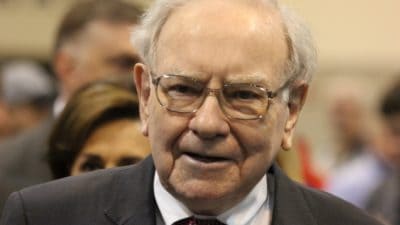
Ace investor Warren Buffett famously has two well-worn investing rules, and I make no apologies for wheeling them out again:
- Never lose money.
- Never forget Rule No. 1
Most novice investors are more concerned with making money than avoiding losing it, and they end up breaking these rules almost before they’ve started.
So how do you do it?
What do Dove, Hellmann’s, Knorr, Lipton, Lynx, Sure, Surf, Sunsilk and Wall’s have in common? They’re all brands that have annual sales of a billion pounds or more, and they’re all owned by Unilever (LSE: ULVR) (NYSE: UL.US).
There are hundreds more, including Ben & Jerry’s, Bovril, Brut, Cif, Colman’s, Domestos, Flora, Marmite, Persil, Pot Noodle, Q-Tips, Radox, Peperami, Sunlight and Vaseline. And that’s just in the UK — who could forget Kecap Bango from Indonesia, Turun sinappi in Finland, or China’s 和路雪?
What they add up to is millions of purchases every day, all over the world, of essential everyday goods — and that means safety. People might forego a holiday, or delay a car purchase, or even default on a credit card. But they’re not going to stop eating, drinking and cleaning their homes.
Steady income
With the exception of a relatively modest 15% fall in the crunch year of 2009, all those sales have helped Unilever to grow its earnings per share steadily. A good chunk of that turns into dividends, and shareholders have been enjoying a yield of around 3.5% per year, which alone would beat a savings account.
Capital gains
If you’d bought Unilever shares way back in July 1988, your initial investment would have multiplied 13-fold — from around 180p to 2,464p per share today. And if you look back at the long-term share price chart, the credit-crunch years are but a minor blip.
Avoid debt
Debt can be one of the big killers of otherwise good companies, so how does Unilever stack up? Well, net borrowings of £6bn at its last year-end in December 2012 might sound like a lot. But the company had a turnover of £41.6bn that year, and is valued at a market capitalisation of £32.3bn — it’s the 17th biggest company in the FTSE 100. Against that, its debt is small change.
Valuation
The shares have fallen back a bit in the past few months, so it’s arguable they were a little overvalued during the summer. But even if you get the valuation and your timing a bit wrong in the short term with a company like Unilever, over the decades you’re still likely to obey Buffett’s rules — and your novice’s investment could turn into a very nice retirement nest-egg.
Finally, if you want another idea for a share that I think is well worth considering for novices, check out the Motley Fool’s Top Income Share report. I won’t tell you what it is, but I’ll tell you one thing — at more than 5.5%, its dividend yield is even better and potentially more reliable than Unilever’s.
If you want to know more, click here to get your free copy today.
> Alan does not own any shares mentioned in this article. The Motley Fool has recommended shares in Unilever.