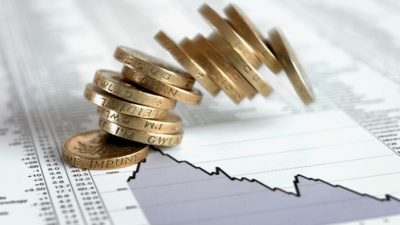
It may seem rather strange to suggest that shares are a better buy than other investments when they’ve fallen so heavily in recent weeks. Clearly, buying shares at the start of the year would have led to losses of as much as 10% on the FTSE 100. But even though that may be the case, they still offer a superior risk/reward ratio than assets such as property and bonds.
Perhaps the one difficulty of investing in shares, however, is volatility. For many people, this can hold them back from buying shares and send them towards the more ‘stable’ performance of other assets. However, by viewing volatile periods as an opportunity rather than a threat, it’s possible to make them work for the investor rather than against him/her. In other words, volatility is a good thing, rather than a bad thing, for long-term investors since it allows the purchase of shares at discounted prices.
Of course, buying low and then selling high can lead to superb long-term returns. For example, between 1984 and the end of 1999, the FTSE 100 increased in price from 1,000 points to around 6,700 points. Add to that dividends of around 3.5% per annum on average and it’s clear that shares can offer turbocharged returns over a prolonged period and simply blow away the returns of other asset classes.
Clearly, this hasn’t been the case in recent years, with bonds and property being favoured assets among many investors due to the unprecedented low interest rates that are currently in place. Due to this, bonds and property have performed relatively well in recent years while the FTSE 100 has fallen by 5% in the last five years. And with interest rates now set to stay low, it could be argued that property and bonds may produce higher returns in future, too.
Long-term potential
While that may be the case in the short run (especially if volatility remains high in global stock markets), in the longer term the FTSE 100 has huge total return potential. It now yields over 4%, which is a level not seen since the depths of the credit crunch, and also trades on a price-to-earnings (P/E) ratio of less than 13, which is historically relatively low. Both of these figures indicate upside potential, while the outlook for the global economy remains relatively sound. For example, US growth is very strong and China is successfully transitioning towards a consumer-based economy.
In addition to the return potential, shares also offer much greater ease of buying and selling, superior liquidity and the prospect of diversification. Only bonds have any of these three attributes and while they offer diversification potential, dealing charges and liquidity can be unappealing. And with property being highly illiquid, expensive and difficult to diversify unless youre a major investor, shares seem to offer the more complete package.
Therefore, for investors who are focused on the long term, shares still seem to be the best buy. The last few weeks may have been difficult to stomach for a lot of investors, but in the coming years the returns of shares continue to have the potential to beat other mainstream asset categories.