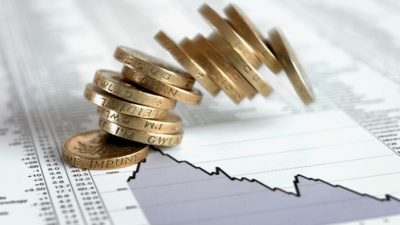
How I’d invest if I only had £1,000 right now

£1,000 may be more precious than you realise. This how I’d invest mine.

The content of this article was relevant at the time of publishing. Circumstances change continuously and caution should therefore be exercised when relying upon any content contained within this article.

You’re reading a free article with opinions that may differ from The Motley Fool’s Premium Investing Services. Become a Motley Fool member today to get instant access to our top analyst recommendations, in-depth research, investing resources, and more. Learn More.

If you’ve got £1,000 to invest and no more, for the time being, that money is precious.

In fact, it’s more precious than you might realise. For example, it dawned on well-known, super-successful investor Warren Buffett early in his life that every dollar he owned was actually worth all of the future dollars he would go on to compound the money into.

So, if he lost a dollar, he was really losing tens and hundreds of dollars in the future. And if you lose your £1,000, you are really losing what could become a vast chunk of your future retirement savings, perhaps.

Minimising the downside risks

Therefore, if I only had £1,000 to invest right now, I’d invest it with particular care and by focusing first on downside risks. To me, that means out the window with individual shares altogether. I reckon there’s too much single-company risk attached to owning individual stock market names, even big ones. Check out the history of well-known shares such as Lloyds Banking Group, Persimmon and Thomas Cook for evidence of the risks involved.

I think it’s better to diversify across several shares so that any one company’s bad performance can’t drag your total overall investment down too far. But you can’t really do that with £1,000 because the execution costs, such as trading fees and tax, will eat up too large a part of your investment.

To overcome the diversification problem, you could invest in a fund run by a manager who chooses the underlying investments. But the ongoing fees can be high, which will eat into your returns. And as a group, there’s plenty of evidence that fund managers often fail to beat the general performance of the stock market. So you could end up paying high fees to actually underperform the market with your investment.

Keeping up with the market, compounding gains

I used to think that choosing your fund manager carefully could lead to market-beating returns, but that idea was blown out of the water for me with the recent Neil Woodford debacle. He was a well-respected and successful fund manager with a knack for outperforming the market, which he did for many years. But since setting up his own investment management firm a little while back, his luck appears to have run out and his funds have lagged well behind the market.

So I’d chuck the idea of investing in managed funds out the window too. Instead, I’d put my £1,000 into a passive, low-cost tracker fund that aims to replicate the performance of the general market. There are many you can choose from, but I reckon a good place to begin is with a tracker fund that follows the fortunes of the FTSE 100 index of the UK’s largest public limited companies.

If you go for the ‘accumulation’ version of the tracker fund you choose instead of the ‘income’ version, it will automatically reinvest the dividends for you, which would set you on the road to compounding your money.


Kevin Godbold has no position in any share mentioned. The Motley Fool UK has recommended Lloyds Banking Group. Views expressed on the companies mentioned in this article are those of the writer and therefore may differ from the official recommendations we make in our subscription services such as Share Advisor, Hidden Winners and Pro. Here at The Motley Fool we believe that considering a diverse range of insights makes us better investors.

More on Investing Articles

Businessman hand stacking up arrow on wooden block cubes
Growth Shares

Why I think the HSBC share price could hit 2,000p by December

Jon Smith explains why the HSBC share price could be primed to rally for the rest of the year, despite…

Read more »

Elevated view over city of London skyline
Investing Articles

£15,000 invested in UK shares a decade ago is now worth…

How have UK shares performed in recent years? That depends which ones you have in mind, as our writer explains.…

Read more »

Businessman hand stacking money coins with virtual percentage icons
Investing Articles

3 FTSE shares with many years of consecutive dividend growth

Paul Summers picks out a selection of FTSE shares that have offered passive income seekers consistency for quite a long…

Read more »

piggy bank, searching with binoculars
Investing Articles

Prediction: Diageo shares could soar in the next 5 years if this happens…

Diageo shares have been in the doldrums for some years now. What on earth could waken this FTSE 100 dud…

Read more »

Investing Articles

With a P/E of 5.9 is this a once-in-a-decade opportunity to buy dirt-cheap easyJet shares?

Today marks a fresh low for easyJet shares, which are falling on a disappointing set of first-half results. Harvey Jones…

Read more »

Investing Articles

Think the soaring Tesco share price is too good to be true? Read this…

The Tesco share price keeps climbing. It's up again today, following a positive set of results, but Harvey Jones says…

Read more »

Artillery rocket system aimed to the sky and soldiers at sunset.
Investing Articles

BAE Systems shares are up 274% in 46 months. And I reckon there could be more to come

Our writer’s been learning about the state of Britain’s defence forces. And he thinks it could be good news for…

Read more »

Stack of British pound coins falling on list of share prices
Investing Articles

5 years ago, £5,000 bought 218 Greggs shares. How many would it buy now?

Greggs sells around 150m sausage rolls every year. But have those who bought the baker’s shares in April 2021 made…

Read more »