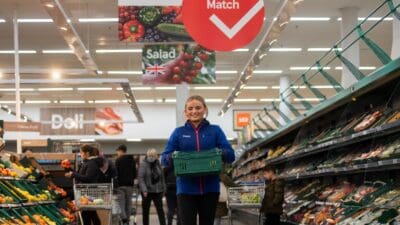
Shares of Associated British Foods (LSE: ABF) are down 7% mid-morning, despite the company announcing a second-half operating performance “ahead of our expectations” for its financial year ending 17 September.
The FTSE 100 conglomerate said sales at Primark are expected to be 9% ahead of last year. Revenues are also expected to advance at the group’s Ingredients business, as well as its Grocery business, which includes such popular brands as Twinings Ovaltine, Kingsmill and Dorset Cereals.
With management guiding on earnings per share (EPS) to be “marginally ahead” of last year, we’re probably looking at 102p-103p. This gives a price-to-earnings (P/E) ratio of around 29 at a share price of 2,950p. Surely too expensive?
Behind the high P/E
ABF’s mundane performance in the last few years has been down to its Sugar business, which has taken a hit comparable to oil companies and miners. The table below shows how the poor showing from Sugar has impacted the group’s operating profit.
| 2015 | 2014 | 2013 | 2012 | |
| Group operating profit (£m) | 1,092 | 1,163 | 1,185 | 1,077 |
| Sugar operating profit (£m) | 43 | 189 | 435 | 510 |
| Group operating profit excluding sugar (£m) | 1,049 | 974 | 750 | 567 |
As you can see, sugar profits have collapsed from a record £510m in 2012. If you look at the group operating profit excluding sugar, you’ll see just how well ABF’s other businesses are performing: the compound annual growth rate for 2012-15 is over 23%.
As with oil and metals, the price of sugar has been recovering in recent months. ABF will start to see the benefit next year, when the group is forecast to deliver double-digit EPS growth, bringing the forward P/E down to a more palatable 25.
I expect Primark to drive double-digit growth for many years to come. European expansion is continuing apace and recent entry into the US — where “the brand has been well received with very positive customer feedback” — represents a huge growth opportunity. The P/E may look high, but an improving outlook for the Sugar business and Primark’s long-term growth prospects lead me to rate the shares a buy.
A key driver for growth
Unilever (LSE: ULVR), at a current share price of 3,510p, isn’t rated quite as highly as ABF — a 12-month forward P/E of around 22 compared with ABF’s 25 — but it’s nevertheless the kind of multiple many investors will shy away from as ‘poor value’.
Again though, when I look below the surface of the company, I see reason to believe that the premium P/E could represent a good buy. The progression of Unilever’s core operating margin — shown below — is the key to my thinking.
| 2015 | 2014 | 2013 | 2012 | |
| Core operating margin (%) | 14.8 | 14.5 | 14.1 | 13.7 |
In its most recent half-year results the company reported a further margin expansion to 15% (versus 14.5% in H1 2015). And there’s a lot more to come.
Unilever is rolling out zero-based budgeting. This technique — in which brand spending must be justified from scratch, rather than budgets being based on the previous year’s spend — can be hugely beneficial to margins. In parallel, the company is adopting a new ‘functional model’, which will introduce clearer accountability and faster decision-making but at a lower cost.
Unilever reckons these changes will deliver €1bn in savings by 2018, which should have a substantial benefit on a company whose operating profit is currently running at €7.9bn. The prospect of further sustainable margin expansion is one of the key reasons I rate Unilever a buy.