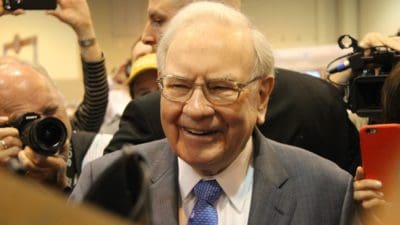
Is it Tiger Woods vs Jack Nicklaus? Or Messi vs Ronaldo? No, this is the battle of arguably the two greatest investors ever. Will the Sage of Omaha take the crown, or is Peter Lynch the growth guru to follow?
Warren
Warren Buffett is the son of a stockbroker from Omaha, Nebraska. From age six he sold bottle tops in his hometown. Then delivered newspapers. By his teens and early 20s he was playing the stock market, learning about stock picking from value investing great Benjamin Graham.
He bought into a near-bankrupt textile mill called Berkshire Hathaway. Through clever and insightful investing and dealmaking, buying assets in unloved businesses at knockdown prices, he turned it into one of the biggest companies globally.
He spotted trends early, noting that a consumer boom was getting underway in America, and bought into giants such as Coca-Cola and Procter & Gamble. Other successes included the Washington Post, insurer Geico and lesser known companies most investors had shunned, but which had inherent strengths he spotted.
Value investing was his forte, and his greatest saying is now almost a cliché: Be greedy when others are fearful, and fearful when others are greedy. This means buying when companies are out of favour and available on the cheap, and selling when everyone is piling-in.
And this approach worked rather well. From 1965 to 2015, through bull markets and bear markets, Berkshire Hathaway delivered a compound annual return of 19.2%. Buffett’s net worth is now $66.7bn. Not bad for a middle-class boy from Nebraska.
Peter
Peter Lynch was brought up in a poor single-parent family and joined Fidelity as an intern after caddying for its president D George Sullivan. In 1977 he became head of the Magellan Fund, an unknown investment fund with just $18m in assets. He was just one of dozens of the company’s fund managers but when he left his role in 1990, Magellan had more than $14bn in assets.
Peter rode the 1980s wave of rising share prices but what amazes me about this success is that he resigned as fund manager before the even bigger bull market of the 1990s. Despite this, he achieved an annual return of 29.2%. So he basically increased the value of his portfolio by nearly a third every year for 14 years – an astonishing achievement.
How did Peter Lynch invest? Well, the interesting thing was that he invested in a diametrically opposite way to Buffett. While Buffett was a value investor who chose blue chip giants that happened to be out of favour at the time, Lynch was a growth investor who specialised in buying into small, fast-growing companies.
While Buffett would have major holdings in perhaps a few dozen firms, Lynch would have literally hundreds of positions in small companies at any one time. And he had to. Think how many $10m holdings in growth companies you need to make $14bn. Over a thousand. Which makes his achievement even more impressive.
Foolish bottom line
So, who wins? Well, investing is about making money. The thing is, Peter Lynch was just an employee of Fidelity; he tended not to have a large investment portfolio of his own. That’s why the Lynch Foundation is valued at only $125m, while Buffett’s wealth is in the tens of billions of dollars, and he’s one of the world’s richest men.
Peter’s return is higher, but it’s over a shorter space of time. Buffett just kept on going. And the result is a legacy that’s one of the largest bequests to charity in history. Warren takes it.