It’s actually happening now. The official data show China’s economy is slowing. What difference does it make to British investors? Well, there are companies listed on the FTSE 100 that are exposed to Chinese growth.
Two companies I am going to look at today are Standard Chartered (LSE: STAN) (NASDAQOTH: SCBFF.US) and BHP Billiton (LSE: BLT) (NYSE: BBL.US). First though, here’s the latest on China — in as brief a way as I can manage!
Slowing Chinese economy
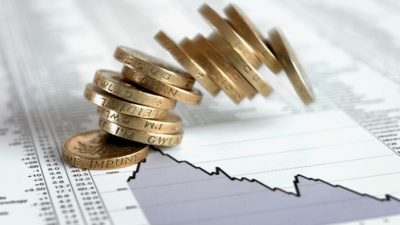
Last week China announced its lowest growth rate in 24 years: the economy grew 7.4% in 2014. That’s down from 7.7% in 2013.
There’s more to come, too. Just look at the downside risks. China’s property market has remained largely unresponsive to policy support. Indeed, lending data from the banking system shows signs of chronic weakness there. At the same time, there are also worries regarding local government debt — which, of course, is intertwined in the property market.
Policymakers also are concerned about the steep fall in energy prices and industrial overcapacity.
The number crunchers at UBS aren’t terribly impressed by any of this and see Chinese GDP growth falling as low at 6.8% in 2015.
Ultimately, China wants to transition its economy into being a consumer-led economic powerhouse — but that will take time.
Standard Chartered losing its grip in China
Here’s the long and the short of it. Standard Chartered, like many banks, lends money to companies. Unfortunately, many of the companies it’s recently lent money to have been overly exposed to falling commodities prices (particularly oil and copper). According to the South China Morning Post, analysts are naturally getting quite concerned about the quality of the lender’s loan book — especially with regard to those companies using commodities to back their debt loads.
So just how bad is it? Let’s break it down. Credit Suisse says Standard Chartered has about $32.6 billion directly tied up with commodity traders. It’s also got another $28 billion or so with a whole bunch of energy, agriculture, metals and mining firms. To put all that in perspective, the bank’s total assets stand at around $690 billion. Sound okay? Credit Suisse doesn’t think so: the investment firm says the bank’s total global commodities exposure may require additional provisioning.
The bottom line? City analysts expect Standard Chartered’s full-year earnings per share to fall 17.3% from last year. Ouch.
BHP Billiton digging its own hole
BHP Billiton is also starting to sniff the foul stench of falling commodities prices. Okay, that’s a bit dramatic, though let’s not forget iron ore prices fell over 40% last year, and most analysts don’t see that trend reversing in 2015. BHP is also exposed to the falls in the prices of oil and copper.
So just how big a bite is this commodities bear market going to take out of BHP? The company made $5.82 in earnings per share in fiscal 2014. Since then earnings per share have fallen to $4.80. According to analysts, earnings-per-share are expected to fall 27% in fiscal 2015 to $3.89 per share. Some indicators already have it lower than that.
Standard Chartered and BHP Billiton still long-term “income plays”
Has that depressed you enough yet? There you have two stocks that looked positively rosy 5 years ago, but now look a little saggy. Believe it or not I’m not actually trying to depress you, in fact I may even have some light at the end of the tunnel for you.
You see the thing is that BHP Billiton and Standard Chartered have both lost value over the past 6 months and, as such, their valuations have fallen. Their lower price-to-earnings multiples therefore look about right now, but… they both have dividend yields of between 5% and 6%. So while they may have lost their ‘sex appeal’ in the short-term, in the long-term, they still look relatively attractive as income or dividend plays. Then again, most half-decent companies look good over the longer run.