Is Aviva Heading For A Dividend Cut?

Published in Company Comment on 10 July 2012

The new chairman hasn't ruled it out.

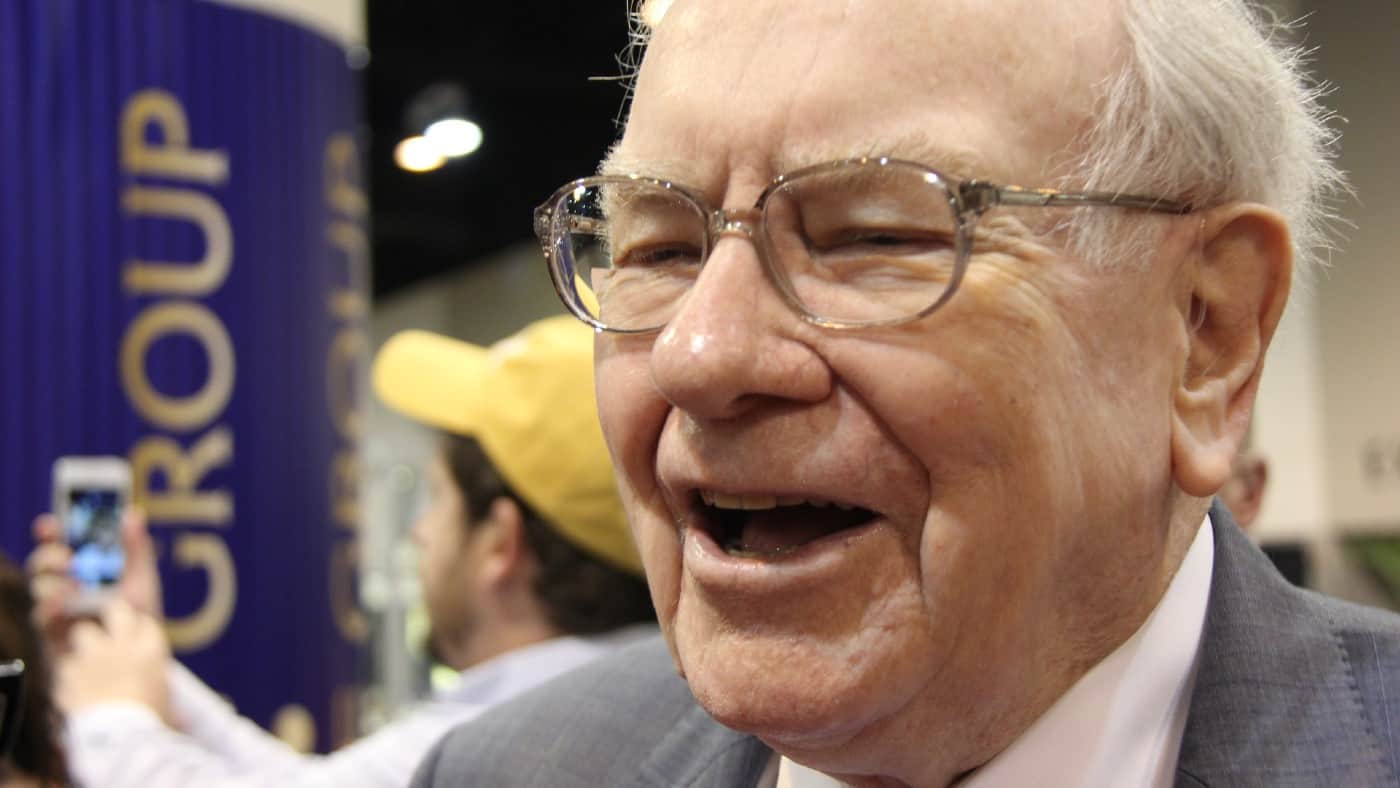
The newly appointed executive chairman of Aviva (LSE: AV) has told investors that he is trying to save the dividend. That's a clear message that it is at risk. With the yield at 9%, the payout is clearly in the danger zone.

But John McFarlane's frankness may mark a new era at the only composite insurer in the FTSE 100 (UKX). It comes with the announcement of a new strategy, a new management line-up and moves that show the new team means business.

If McFarlane can pull off his plans and maintain the payout, then shareholders will finally see the value in the company realised. It's been a nerve-wracking 12 months, with the shares down 35% while the FTSE 100 has dropped just 6%.

Mess

There's no question that Aviva is in a mess. Its own management describes it as too complex and bureaucratic, with weaker and more volatile capital than its peers, overly exposed to traditional capital intensive products in low growth markets and to the eurozone in particular, and with a history of too many changes of strategy, unsuccessful restructurings and opaque communication.

To turn the business -- any business -- around requires capable management, a sound strategy, effective execution of the strategy and a forgiving external environment. Recent developments suggest the first three are in place, though the company remains at the mercy of the eurozone.

Management

McFarland has certainly turned in an impressive performance in his first two months. Parachuted in as executive deputy chairman in May after former CEO Andrew Moss was ousted in the 'Shareholder Spring' that saw the departure of several overpaid but under-performing FTSE 100 executives, he became executive chairman this month.

Also significant is the appointment of David McMillan, former head of UK and Ireland, to the post of director of group transformation, charged with implementing the new plan. In plain words, he is interim CEO.

McFarlane's fast action forestalls the danger of the Aviva being seen as rudderless at a vulnerable time, which otherwise could have made it a takeover candidate. But it complicates the challenge of finding a permanent CEO, who will have to be happy implementing the course of action already set out.

Strategy

The strategy is one of significant retrenchment. The aim is to focus on fewer businesses where higher returns can be achieved. Aviva has undertaken a textbook analysis of its 58 business segments and identified 16 of them that consume 38% of its capital but contribute just 18% of its operating profit after tax. These will be sold or rundown.

A relatively low and volatile capital base is one of the reasons behind Aviva's low share price. It will now target internal economic capital levels of 160-175% of the minimum required. The aim is to achieve this through disposals and better capital rationing. A dividend cut or raising new equity would be the last resort.

And the insurer aims to take the knife to middle management, cutting down the layers between CEO and operational staff from nine to five to save £400 million from the end of 2011. Total staff costs were £1.3bn last year, so that's a sizeable challenge.

Disposals

The new strategy was immediately followed by announcement of the sale of half of Aviva's remaining holding in Delta Lloyd, which is listed on the NYSE Euronext Amsterdam exchange. That yielded £380 million, but more importantly reduced the holding below 20%, where it will have a less volatile impact on Aviva's capital.

Reuters also reported that the sale of Aviva's Malaysian joint venture, which is expected to raise about $500 million, is progressing well with four potential buyers through to the second stage.

The big question mark is Aviva's US operation. Bought for £2 billion in 2006, if McFarlane can pull off a quick sale then it would transform Aviva's capital position.

Eurozone

But, of course, the external environment is out of the company's control. It is significantly exposed to the eurozone, both through the amount of business it conducts in France, Spain and Italy, and also in its investments. Its share price often acts as a barometer of sentiment towards the region.

So a blow-up in the eurozone would spell disaster for the company. Barring that, it looks as if the company might just get away with maintaining the payout.

But there's still a real risk of a cut. Aviva is a racy share. For widows, orphans and those of the more nervous disposition there are safer bets on the FTSE 100 that still have juicy yields.

Standard Life (LSE: SL) and Legal and General (LSE: LGEN), both life assurers with a long heritage, yield 5.9% and 5.1% respectively. That's a respectable payout from companies that have much less downside risk than Aviva, albeit they lack Aviva's recovery potential.

Baffled by shares? This special report -- "What Every New Investor Needs To Know" -- can start you on the path to investing. What's more, the report is free!

Further Investment Opportunities

> Tony has shares in Aviva but no other stocks mentioned in this article.

Share & subscribe

Comments

The opinions expressed here are those of the individual writers and are not representative of The Motley Fool. If you spot any comments that are unsuitable hit the flag to alert our moderators.

F958B 10 Jul 2012 , 10:17am

Aviva's dividend yield is 9.2% - more than twice the market median.

I can't recall a situation in living memory when a company with such a high yield did not subsequently cut the dividend.

Judging by the dividend yield differential to other insurers, I'm expecting a cut in Aviva's dividend of between one-third and one-half within a year, maybe two years at most.

I suspect much of this is already priced-in by now, so the share price reaction to a dividend cut may not be significant.

It's quite possible that the dubious future dividend will be supplemented by the proceeds of asset sales; being paid as special dividends on top of a reduced ordinary dividend.

Longtermyieldman 10 Jul 2012 , 11:55am

Either a dividend cut or a share price re-rating.

Given the likely realisations from the divestment of non-core and low-performing assets and the focus on improving return on capital, my bet is that the dividend will be maintained but the share price will rise, the kind of yield compression that existing shareholders should welcome rather than fear.

CodeGimp 10 Jul 2012 , 12:04pm

Hmm. I'm not impressed at all. Dumping poor performing areas of the business is all well and good, but I think they're throwing out the baby with the bathwater. I think that dumping (in particular) Delta Lloyd at absurdly cheap fire-sale prices (not to mention effectively pre-announcing the sale, hence dropping the price and ensuring a "Brown Bottom") is surely a sign of both desperation and poor judgement. Contrast this with David Einhorn's position on DL about this time last year:
- http://articles.businessinsider.com/2011-06-02/wall_street/29987964_1_fund-holdings-dutch-insurer-macro

Selling off these assets still begs the question: *Why* are these business areas under-performing so badly compared to insurance rivals? Management has clearly been found to be wanting, and they'll still be there after the fire-sales have completed, no doubt hoping to grab even more executive pay and jollies at the expense of the company owners. Problems like that are cultural - and deeply entrenched. My gut tells me that a divi cut has been on the cards from the very start and this is all a (poorly executed) exercise in stalling for time whilst hoping that the Eurozone issues ease off, hopefully causing a short-term relief rally before dropping a divi cut bombshell.

Even that (currently) huge dividend isn't superior to rivals like RSA and Resolution. In fact the renowned Aviva pension deficit might make the rivals a better value case, too.

Aviva gets a "No" from me, I'm afraid

CodeGimp 10 Jul 2012 , 12:04pm

Hmm. I'm not impressed at all. Dumping poor performing areas of the business is all well and good, but I think they're throwing out the baby with the bathwater. I think that dumping (in particular) Delta Lloyd at absurdly cheap fire-sale prices (not to mention effectively pre-announcing the sale, hence dropping the price and ensuring a "Brown Bottom") is surely a sign of both desperation and poor judgement. Contrast this with David Einhorn's position on DL about this time last year:
- http://articles.businessinsider.com/2011-06-02/wall_street/29987964_1_fund-holdings-dutch-insurer-macro

Selling off these assets still begs the question: *Why* are these business areas under-performing so badly compared to insurance rivals? Management has clearly been found to be wanting, and they'll still be there after the fire-sales have completed, no doubt hoping to grab even more executive pay and jollies at the expense of the company owners. Problems like that are cultural - and deeply entrenched. My gut tells me that a divi cut has been on the cards from the very start and this is all a (poorly executed) exercise in stalling for time whilst hoping that the Eurozone issues ease off, hopefully causing a short-term relief rally before dropping a divi cut bombshell.

Even that (currently) huge dividend isn't superior to rivals like RSA and Resolution. In fact the renowned Aviva pension deficit might make the rivals a better value case, too.

Aviva gets a "No" from me, I'm afraid

MAACPRIME 10 Jul 2012 , 12:19pm

"And the insurer aims to take the knife to middle management, cutting down the layers between CEO and operational staff from nine to five to save £400 million by the end of 2011."

2012, surely?

sparkyscientist 10 Jul 2012 , 12:24pm

"And the insurer aims to take the knife to middle management, cutting down the layers between CEO and operational staff from nine to five to save £400 million by the end of 2011."

Hmmm - they had better get a move on then...

F958B 10 Jul 2012 , 1:09pm

Longtermyieldmand

Can you find many example of a FTSE100 company with a 9.2% yield which didn't cut the dividend within a year or two?

If you can find some examples, I'd be very interested in which companies and when, as I can only think that possibly the rock-solid-earnings of tobacco or water companies in 1999-2000 reached those kind of yields and managed to sustain them.

MAACPRIME 10 Jul 2012 , 2:36pm

"*Why* are these business areas under-performing so badly compared to insurance rivals? Management has clearly been found to be wanting, and they'll still be there after the fire-sales have completed, no doubt hoping to grab even more executive pay and jollies at the expense of the company owners. Problems like that are cultural - and deeply entrenched."

It's probably down to a lack of continuity. There were regular reports of department heads being given the chop while Moss was in charge. Also, having affairs with the wives of senior employees is probably distracting.

duffmanchon 10 Jul 2012 , 3:43pm

The MF sure loves to write articles about Aviva! Pump and dump?! Most brokers rate it a buy now and analysts estimates are favourable going forward, I don't put much truck in these but I think they may be symptomatic of a more favourable market view which will help the share price. Even if the dividend is cut they are still cheap on P/E terms and I can't see it being cut to the FTSE average so it could still be a good buy now. I am a long term buy and holder and I can't see Aviva not being around and profitable in 5-10yrs time.

NEILLCAU01 11 Jul 2012 , 4:56pm

The new strategy seems to have the right ideas but will new potential CEOs be put off by the fact that the strategy will be well advanced before an appointment is made in 2013?

Join the conversation

Please take note - some tags have changed.

Line breaks are converted automatically.

You may use the following tags in your post: [b]bolded text[/b], [i]italicised text[/i]. All other tags will be removed from your post.

If you want to add a link, please ensure you type it as http://www.fool.co.uk as opposed to www.fool.co.uk.

Hello stranger

To add your own comment, please login.

Not yet registered? Register now.